


September 8, 2026
Canada’s 50% Lighting Tariffs Take Effect
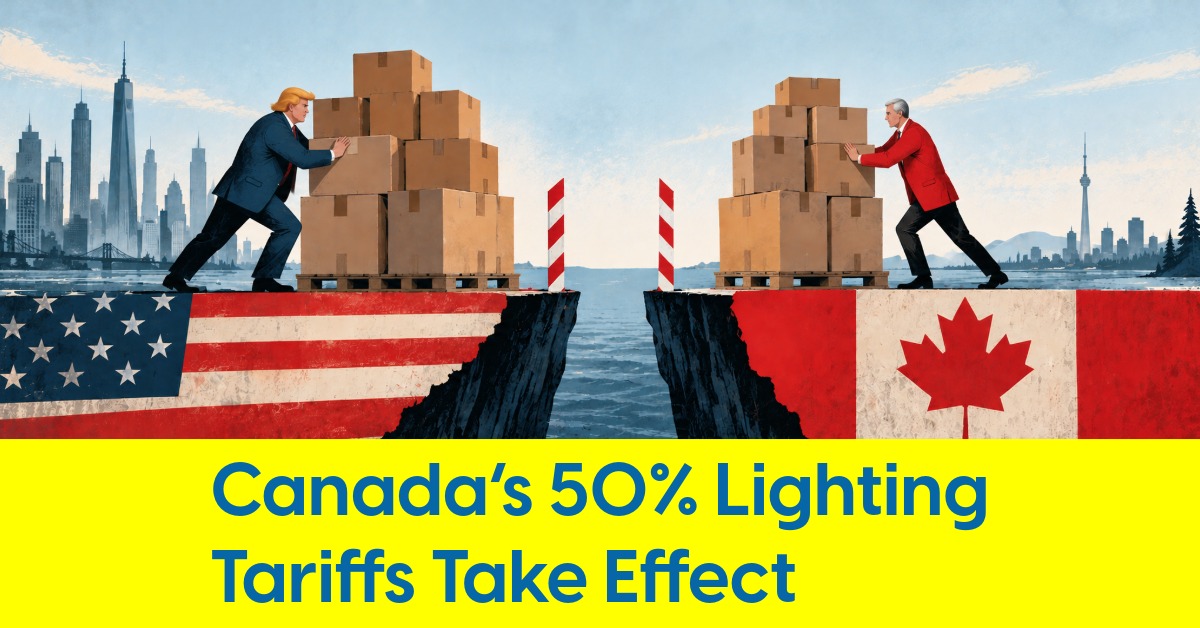
Equal tariff rates collide with two lighting markets of very different sizes
The tariff deadline that lighting people on both sides of the U.S.-Canada border have been preparing for has arrived.
Beginning Tuesday, September 8, Canada is imposing 50% retaliatory tariffs on several categories of U.S.-origin goods, including lighting products. The duties are part of Ottawa’s broader countermeasures covering nearly C$28 billion in American goods after the U.S. imposed its own 50% tariffs on Canadian products last month.
For lighting, four Canadian tariff classifications cover U.S.-made luminaires, lighting fittings and certain parts. Inside Lighting detailed those classifications in August, along with the manufacturers, agents, distributors and specifiers potentially caught between the two tariff walls.
Today, the calculation becomes real.

Equal Rates, Unequal Markets
On paper, lighting products now face the same 50% border penalty in either direction. In practice, symmetry gets harder to measure.
The list of U.S. lighting manufacturers capable of exporting finished goods into Canada is considerably longer than the roster of Canadian manufacturers shipping fixtures south. But the U.S. lighting market is also many times larger than Canada's.
That creates an unusual imbalance. Canada potentially has more American lighting suppliers to penalize, while Canadian manufacturers depend on access to a much larger neighboring market.
One U.S.-based lighting component supplier pointed to a more immediate consequence: at least one Canadian fixture manufacturer appears to be considering alternatives to its U.S.-made drivers and power supplies rather than absorb the new tariff. The supplier told Inside Lighting that its products were being evaluated for substitution, offering an early example of how the duties could begin reshaping sourcing decisions within the Canadian lighting manufacturing sector.
Conventional wisdom points to smaller Canadian lighting manufacturers as potentially the most exposed — particularly those that rely heavily on U.S. sales but offer limited product differentiation. For those companies, a 50% tariff could be especially difficult to overcome in a much larger market where buyers have numerous domestic alternatives.
A Defensive Move With Offensive Consequences
Canada has consistently characterized its tariffs as retaliation rather than the opening move. Ottawa announced the countermeasures only after the U.S. duties took effect and trade negotiations collapsed.
That distinction matters politically, but a linear fixture crossing the border doesn't know who started the fight.
For Canadian lighting companies, the argument that they have been pulled into a dispute they did not initiate is understandable. Some manufacturers now face a 50% barrier to the industry's largest nearby market while simultaneously operating in a domestic economy far smaller than the United States.
American manufacturers aren't insulated. Canada remains an important export market, and a 50% duty can quickly turn an established specification into a substitution exercise.
There is one near-term reprieve. Canadian rules exempt qualifying U.S. goods already in transit when the countermeasures took effect, meaning some shipments moving before September 8 can cross without the new duty.
How long the current tariff structure lasts is another question. Major news organizations reported Tuesday that U.S. officials have warned of additional retaliation following Canada's move.
For lighting companies, then, September 8 may be less an endpoint than the day the industry's tariff experiment became real.