


October 10, 2026
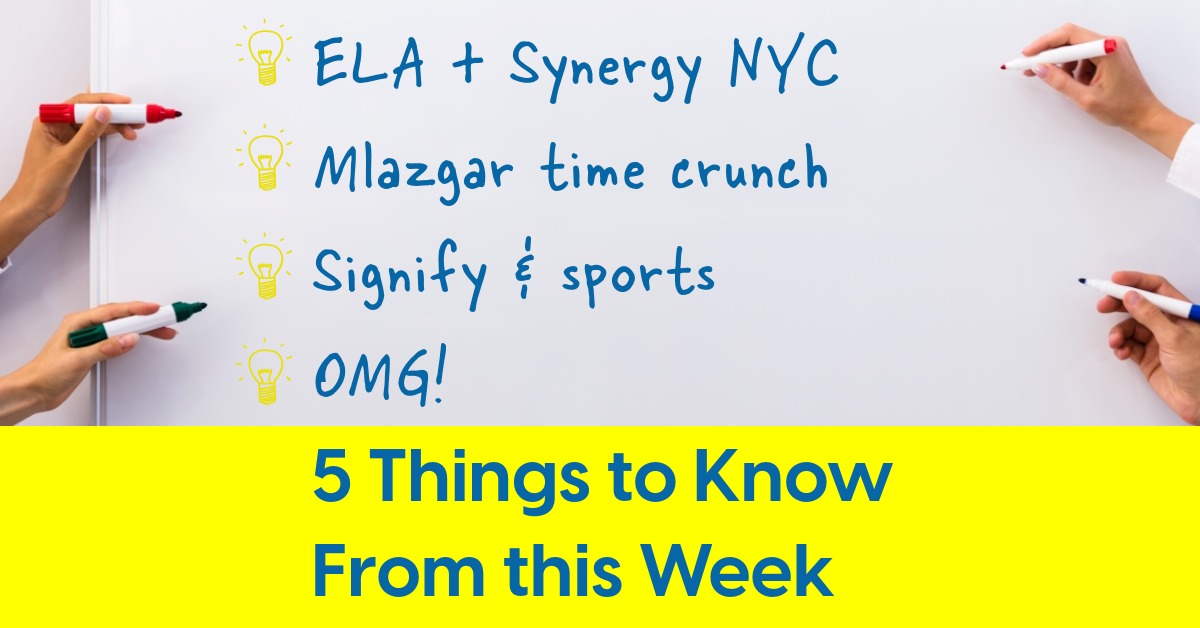
5 Things to Know: October 10
Four NYC lighting events land within 15 days. Plus, contaminants beneath LED chips inspire a major recall.
1. NYC Lighting Designers Face a Packed Invitation Calendar
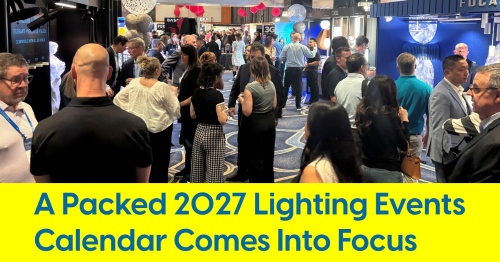
For New York lighting designers, the scarcest resource this fall may be a free evening. Four industry events are landing within 15 days, all competing with deadlines and billable hours.
September 30 brought a double booking. ELA + Synergy opened a two-day show at the Altman Building with 40 vendors across lighting, controls and shades, plus tarot readings and DJ sets. The same night, Enterprise Lighting Sales hosted its Autumn Illumination evening on the terrace at Bar Harta in Midtown.
SDA Lighting & Controls followed with its own showcase October 6 and 7, a show the agency has historically staged every other year.
The stretch closes on Wednesday, October 14, when the Designers Lighting Forum of New York (DLFNY) presents its third Beacon Awards at Sony Hall.
For reps and manufacturers, the calendar shows how crowded the courtship has become. For designers, it raises a simpler question: which invitations earn a slot between the deadlines?
2. A Ford Recall Follows the LED Supply Chain
Most LED failures get blamed on drivers, heat or installation. Ford’s newest recall traces one back to the LED chip fab.
In a September 22 filing with the National Highway Traffic Safety Administration, Ford recalled 41,748 vehicles, including 2026 F-250 through F-550 Super Duty trucks and 2025 through 2027 Expeditions, over headlamps that may dim or go dark. According to the filing, contaminants may sit beneath the LED chips in some assemblies, and the chips may have been exposed at the chip supplier’s manufacturing facility.
The headlamps come from Flex N Gate, the Tier 1 supplier in Effingham, Illinois. Ford’s investigators traced the contamination further upstream to an unnamed Tier 3 chip maker.
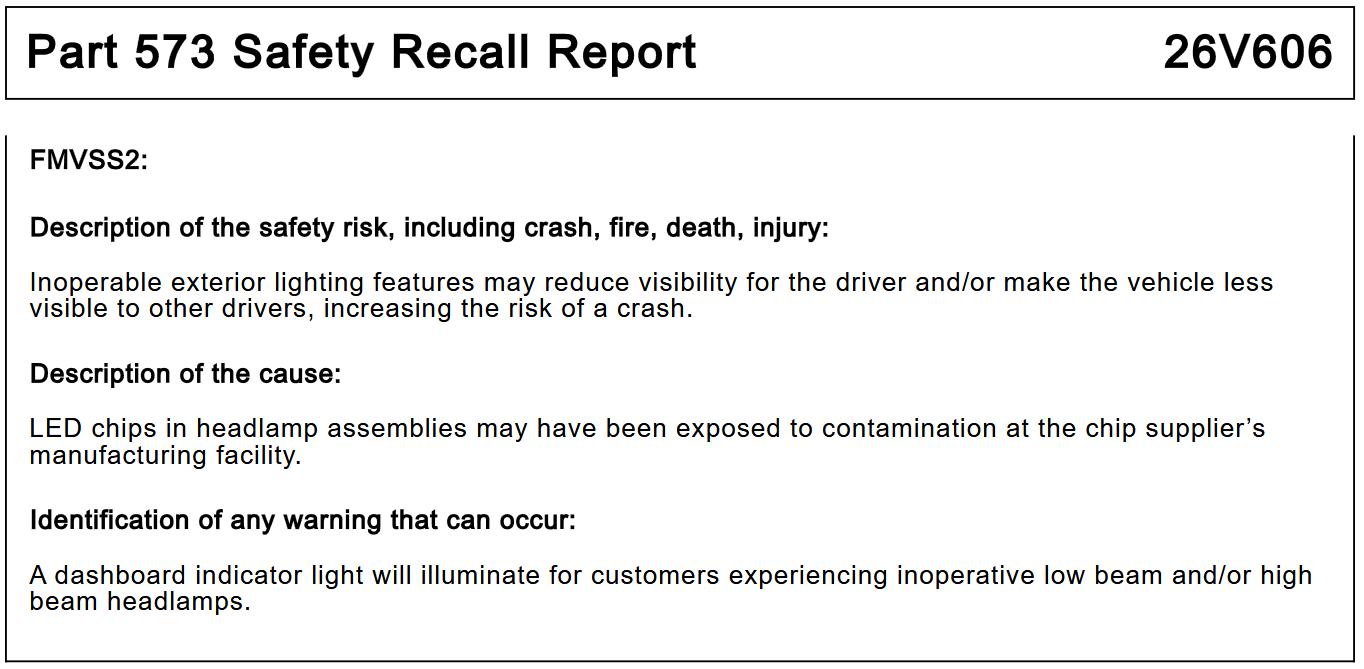
The numbers are small. Ford estimates 1% of the vehicles are defective and cites six affected vehicles, with no reported crashes or injuries. Because failures appear early, the recall covers only vehicles unsold or in service less than four months. Dealers will inspect both headlamps and replace any that fail.
For manufacturers buying LED modules, the lesson is to look past the module to the chip inside. One major commercial luminaire maker has already learned that lesson in a rather public and expensive way.

3. The Brightness Test Debuts as a Monthly Reader Challenge
This week Inside Lighting launched The Brightness Test in collaboration with the Illuminating Engineering Society (IES), opening with a 10-question quiz on TM-30 and light quality. The response was encouraging: 376 people started the quiz and 270 finished it, a 72% completion rate.
The average score was 8.2 out of 10, and 56 lighting people earned perfect scores. Readers were strongest on the practical questions, the ones about specifying color rendition and answering customers. Ninety-seven percent understood why no product can deliver perfect color rendition at maximum theoretical efficacy.
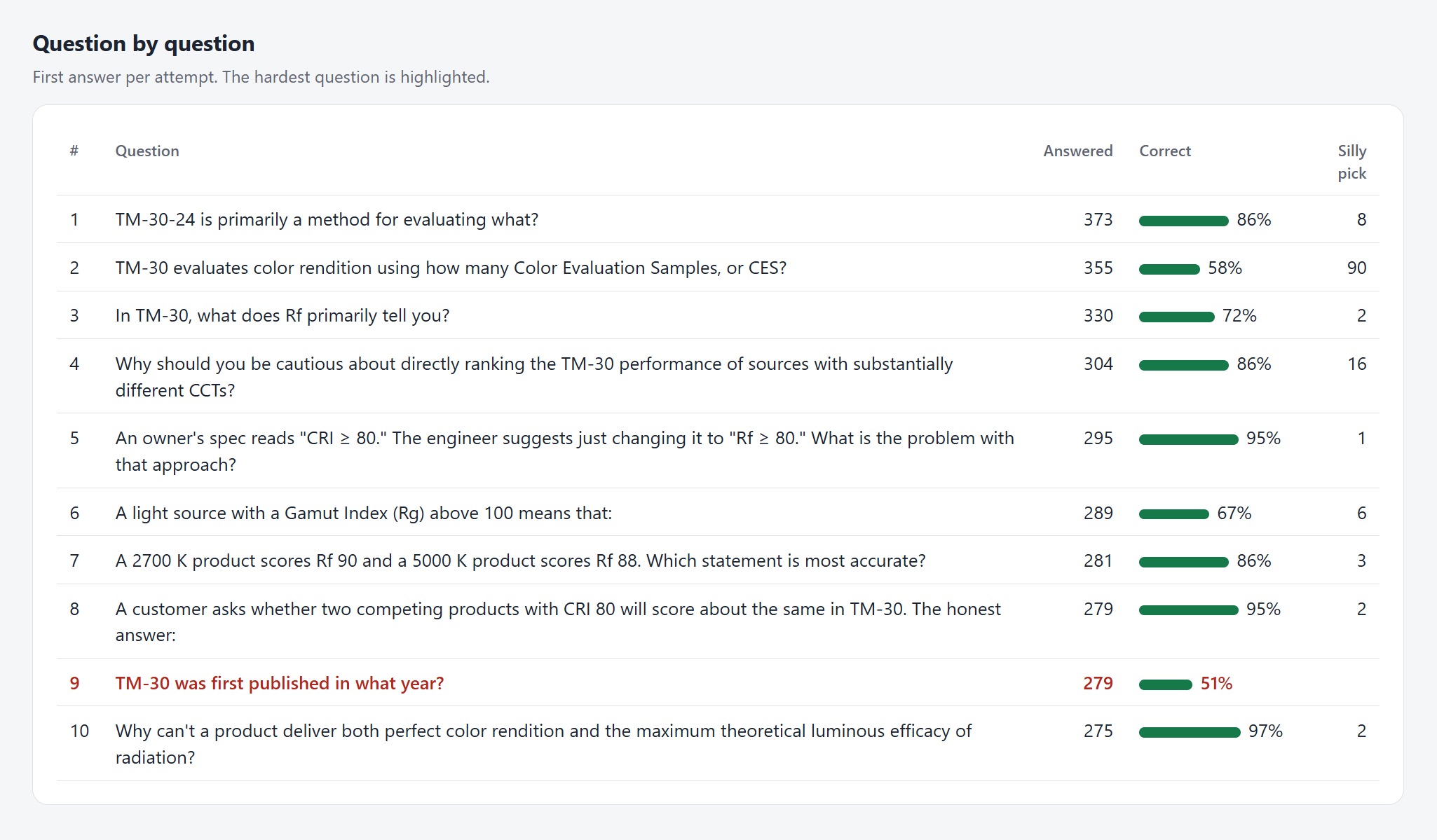
The toughest question had nothing to do with photometry. Only 51% knew the year TM-30 was first published, making a history question the hardest item on a technical quiz. We’ll take that as a compliment to our audience: the science stuck, the trivia less so.
Spoiler: the year · Tap to reveal
2015, published as IES TM-30-15.
The most unexpected feedback was how often participants called the experience “fun,” a word rarely applied to a technical memorandum.
Thanks to everyone who took part. The Brightness Test will return monthly, covering technical subjects and broader industry knowledge.
Take The Brightness Test here »
4. Years of Dog Visits Topple a San Diego Pole
According to the Times of San Diego, a traffic signal pole in Little Italy toppled on its own shortly after 7 p.m. on October 2. Nobody hit it. A witness said the fall sounded like a gunshot, and the pole knocked the front bumper off a car. No one was hurt.
City transportation employees pointed to an unglamorous culprit: years of dogs relieving themselves at the base had corroded it.
In San Diego, a spec sheet promised a “corrosion-resistant finish.” Snoozles disagreed. https://t.co/nNuDXjRisY
— Inside Lighting (@InsLighting) October 9, 2026
The wiring stayed live, so the signals kept flashing from the pavement. A city signal technician arrived around 8:15 p.m. to shut them down, a crane crew cleared the pole by 11:10 p.m., and a temporary signal had the street open shortly before midnight.
For anyone who specifies poles, finishes or base covers, the lesson is humbling. Salt air gets the attention, but the most persistent corrosive agent on a city sidewalk may be on a leash.
5. A Judge Who Helped Shape LED Litigation Returns to Practice
Alan Albright has traded his judge’s robes for a law firm partnership. As a federal judge in Waco, Albright at one point presided over one-fourth of all patent cases in the country, including LED disputes closely followed by engineers and intellectual property attorneys in our industry.
As reported by Bloomberg Law, Albright, 66, left the bench in August and joined A&O Shearman in Austin as an intellectual property litigation partner. He said he missed being in the courtroom, and his first trial in eight years was set for late September.
Lawyers who argued before him may enjoy the role reversal. “I cut people off the fourth time they’ve told me the same thing,” he said. Now he has to keep his own arguments short.
He also plans to take cases well beyond patents, including environmental law and white-collar crime.