


September 2, 2026
Lighting Maker Fined for California Compliance Failures
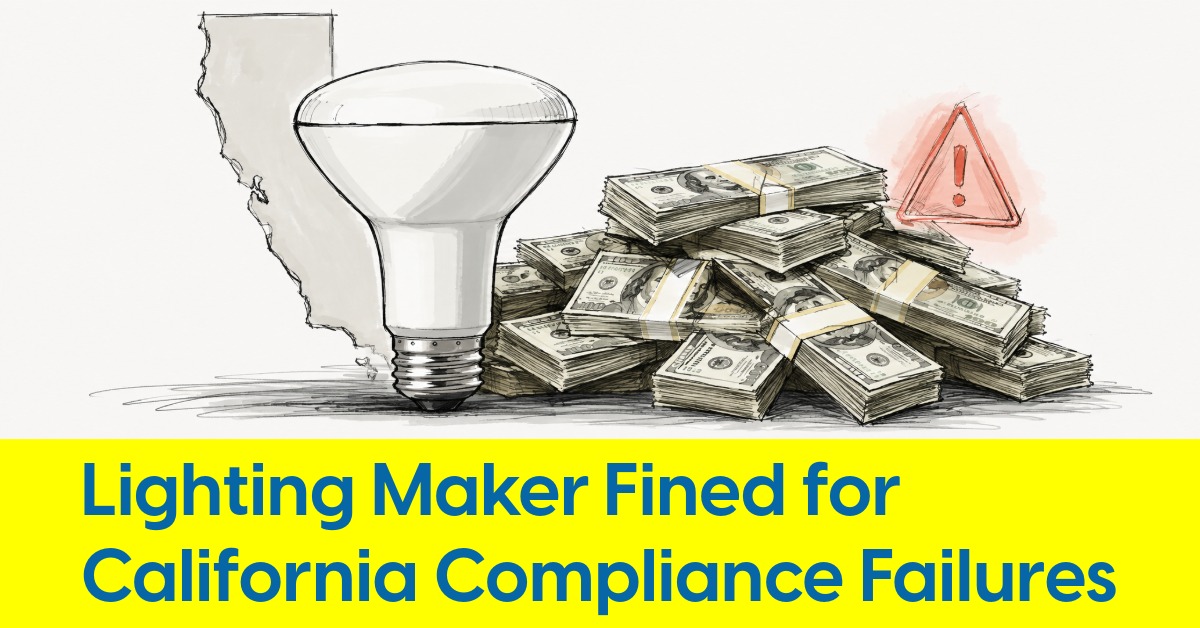
State regulators cited efficiency, certification database and product marking violations
Luxrite is the name many lighting people know, but the company behind the brand just spent four years failing to prove its products met California's efficiency standards. All Star Lighting Supplies, which markets SLED lamps (state-regulated LED lamps) and SDDLs (small-diameter directional lamps) under the Luxrite name as its private label, will pay the California Energy Commission (CEC) $50,000 in five monthly installments, settling a case built on three separate compliance failures at once.
The company is based in Avenel, New Jersey (Exit 127).
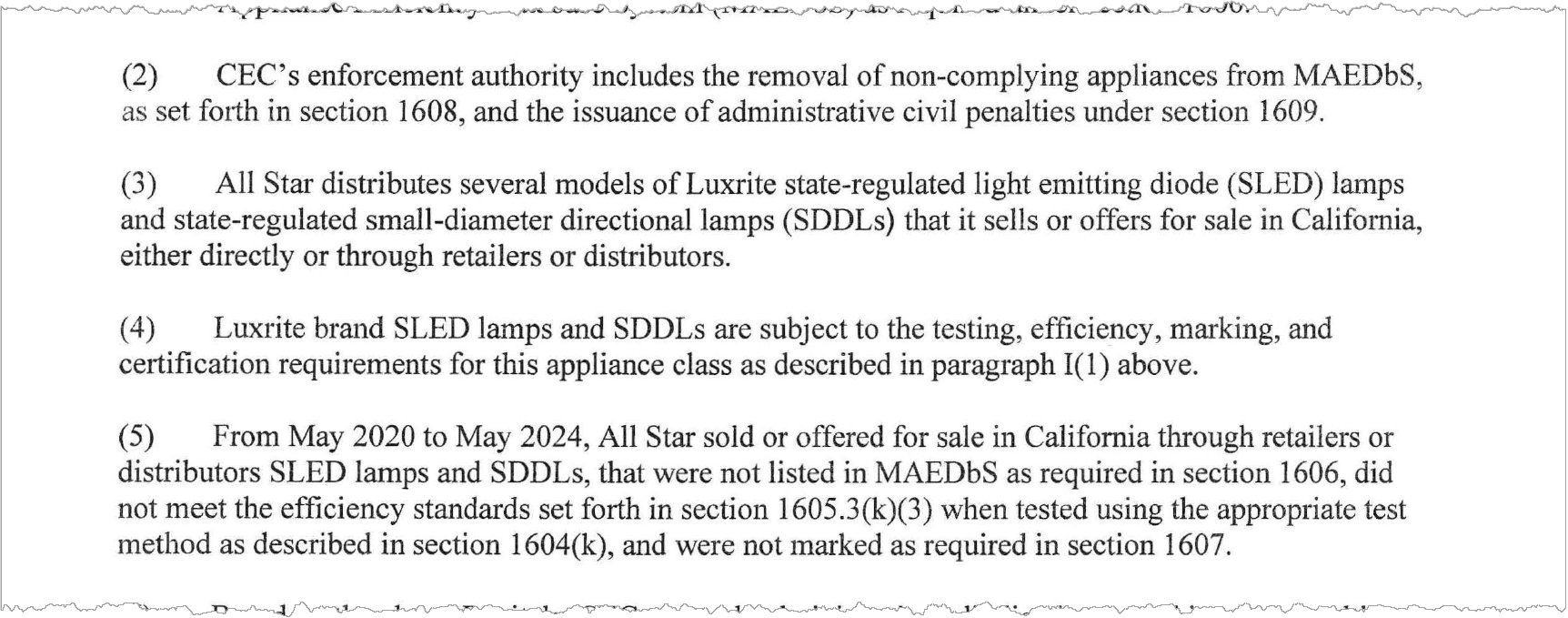
In plain terms: the Luxrite products were never entered into California's efficiency database, so the state had no record they existed. When CEC tested them using its required method, they missed the efficiency standard set for that product category. And the units themselves lacked the compliance labeling regulators require on the product. For lighting people, that trio, database listing, efficiency performance, and physical marking, represents the basic compliance chain the Appliance Efficiency Regulations are built on. Missing all three across four years points to a systemic gap rather than a clerical slip.

Cooperation as a Strategy
CEC's own recitals credit All Star with redesigning the affected products, recertifying and remarking units, notifying retailers, and pulling noncompliant SLED lamps and SDDLs from the California market before the agreement was finalized.
The commission weighed that cooperation, along with statutory factors including violation history, willfulness, and consumer harm from wasted energy, in settling for $50,000 rather than pursuing per-violation penalties through administrative adjudication.
The Fine Print
The payment structure carries teeth. Miss a deadline by more than 15 days and the full remaining balance comes due immediately, with All Star on the hook for CEC's investigation and legal costs if enforcement follows. Beyond the penalty, All Star committed to testing all basic models going forward, keeping its database listings current, assigning new model numbers to redesigned units, and marking every affected product correctly.
The agreement releases All Star, its parent company, and affiliated individuals from further claims tied to the identified model numbers, but only for the violations already on the table. For distributors watching California's efficiency enforcement posture, the case is a reminder that database gaps do not stay buried, even years after the fact.