


October 3, 2026
5 Things to Know: October 3
NYC designers crowd ELA + Synergy. Plus, investigators probe streetlight pricing and missing fixtures.
1. ELA + Synergy Draws a Crowd in NYC
Lighting agent trade show season is in full swing across major U.S. markets, and we stopped into New York City for the ELA + Synergy event in Chelsea. It was the fourth edition of the event, and a lot has changed since the first one in 2018. Back then, ELA hadn't yet merged with Synergy, and Lutron, USAI and Signify's Genlyte Solutions portfolio weren't on the line card. This year's show was the biggest yet: two days, 40 exhibitors, and metro-area designers packing the floor.
Downstairs, THE CUBE offered a break from the crowd. The interactive installation responded to visitors' movements in real time, shifting projected graphics and light effects inspired by phosphorescence, flowing water, birds in flight and starfields.
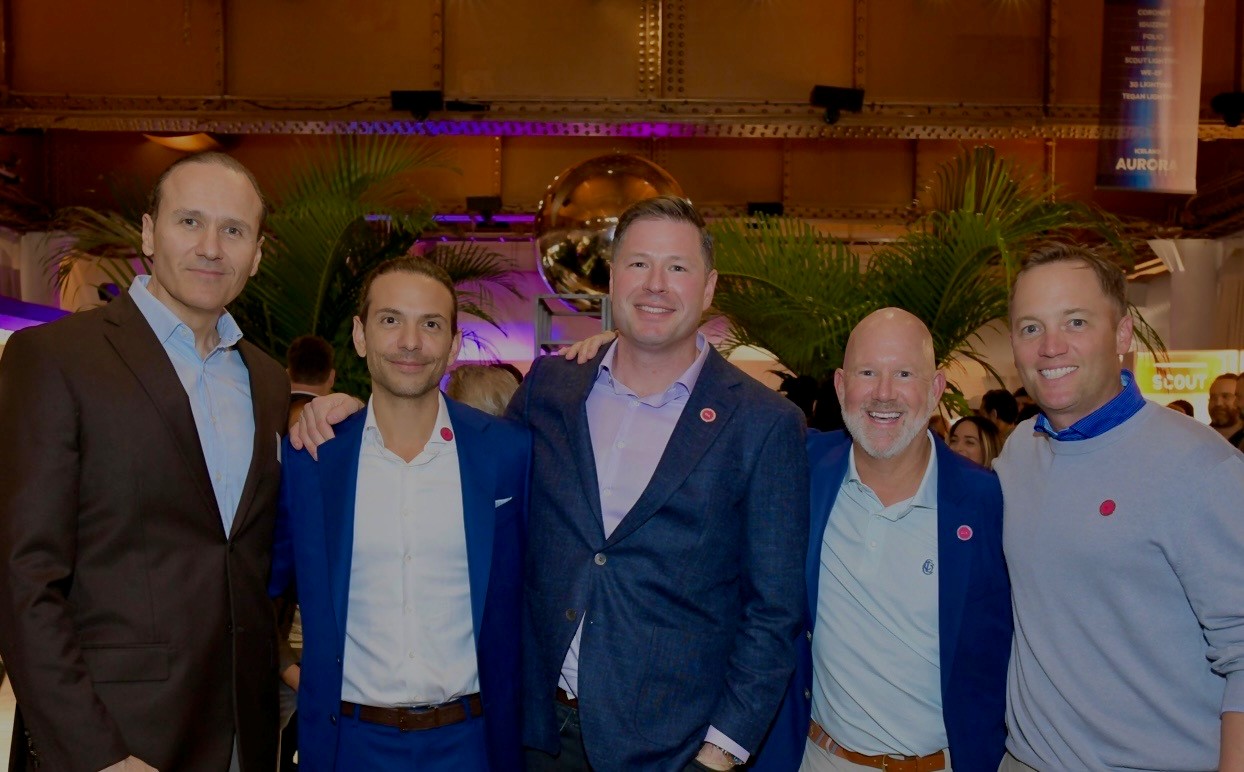
Left to Right: Al Uszynski of Inside Lighting with ELA + Synergy principals John Weintraub, Brian Labbe, Larry Rodger and Hagen Denton.
A DJ and roaming entertainers kept the energy up, including a tarot card reader and a close-up magician, also named Al. Lighting-themed giveaways included a Dark Sky trip to Sedona and a Northern Lights trip to Iceland.
We mingled with rooms full of lighting people and left with a stack of business cards, sore feet and no trip to Iceland. Maybe next time.
2. Mlazgar's Minnesota trial pushed to January as South Carolina bills come due
A federal judge in Minneapolis has postponed Mlazgar Associates' trial against Focal Point from November 9 to January 19, 2027.
Focal Point has already been found liable for damages, so the trial will decide only how much it owes. Focal Point sought the delay after its sole economic expert said a serious illness affecting his wife would keep him from preparing or testifying. Mlazgar opposed, arguing that its $9.25 million judgment loss to Hubbell Lighting in South Carolina made the prejudice from any delay "extreme." The judge granted the postponement the day Mlazgar filed its objection.
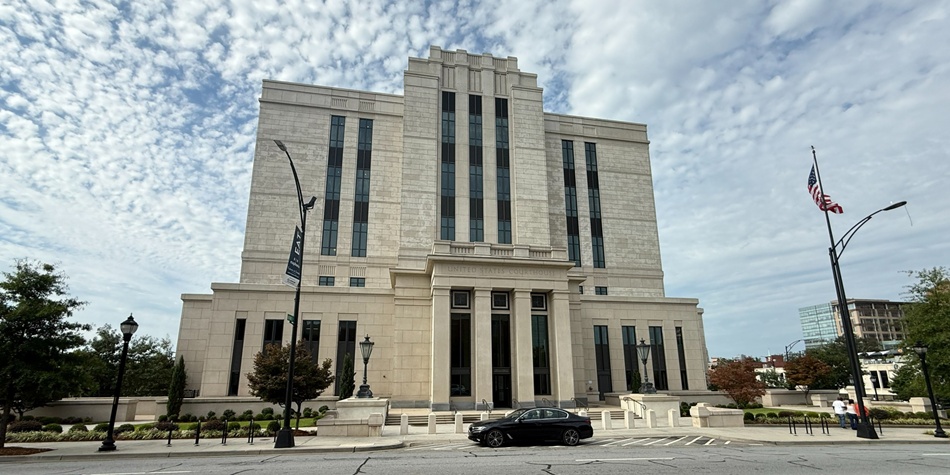
Above: Greenville's U.S. Courthouse during the Mlazgar-Hubbell Lighting trial, Aug. 21. Out front sit a mismatched assortment of outdoor luminaires and one illegally-parked Inside Lighting company vehicle.
The two cases share an origin. Mlazgar added Cooper Lighting to its line card in 2020, and Focal Point and Hubbell Lighting (now Current) each terminated the agency. Mlazgar sued each company separately.
In Greenville, that judgment keeps growing, with interest accruing at roughly $1,000 a day. Hubbell is demanding an $11.56 million bond to hold off collection during the appeal, and an automatic reprieve was set to expire October 1. Mlazgar has asked the judge to wait, and separately to erase Hubbell's award entirely.
Whatever Minnesota pays, it now arrives months after South Carolina wants its money.

3. Formula One Puts Its Faith in Signify’s Electric Daylight
The Mercedes-AMG Petronas F1 team has brought the sky indoors at its headquarters in Brackley, Northamptonshire, England, according to a Forbes writer who toured the facility. Signify, a team partner, installed more than 1,600 luminaires across two new buildings, including more than 100 NatureConnect units that simulate a skylight, blue sky included. A Day Rhythm setting shifts intensity and color through the day.
The pitch is wellness. Brackley runs around the clock, with more than 950 staff supporting races in distant time zones, and Signify says the system helps with alertness, focus and circadian rhythm. The technology has reportedly followed drivers George Russell and Kimi Antonelli into their rooms and travel trucks, backed by personalized light plans meant to fight jet lag.
If George Russell wins Sunday, expect Signify to mention, very modestly, that he was exceptionally well-rested. https://t.co/wgBrhnDfhX
— Inside Lighting (@InsLighting) October 2, 2026
The Forbes writer was careful to note that no one is claiming a skylight finds lap time. But F1 teams chase marginal gains wherever they can, and with seven of 11 teams based within about 35 miles of Brackley, in so-called "Motorsport Valley," a better workplace also helps keep talent from walking down the road. For lighting people, it's a high-profile showcase for the wellness case.
4. Ukraine Probe Targets Streetlight Prices, and Missing Fixtures
Investigators in Ukraine's Odesa region are examining whether a municipal utility overpaid for LED streetlights, Intent reports, citing the Center for Public Investigations. The case centers on Ecoservice, a municipal enterprise in the port city of Pivdenne. In September 2024, it bought 130 EkoStreet fixtures from Ecolight Ukraine for ₴721,500 (about $17,400), or ₴5,550 (about $134) apiece. In November 2025, it ordered 100 more from the same supplier at the same unit price.
Allegations in Ukraine: officials bought streetlights at an inflated price and can't find the old ones.
— Inside Lighting (@InsLighting) October 2, 2026
Unheard of in the US. Truly. Never. Once.https://t.co/x3U84ieVDW
Investigators suspect officials didn't properly verify whether those prices were reasonable, which may have caused significant losses to the local budget. A court has authorized an inspection of the enterprise's warehouse.
The bigger mystery may be the old fixtures. Investigators want to know what happened to the defective units removed in 2024 and 2025. The director told them he signed for the new goods but couldn't say where the old ones went. A warehouse employee said only new, working fixtures were stored there. Neither report says what a fair price would have been or whether anyone has been charge
5. Respect Thy Elders: China Revises Senior Care Lighting
In a culture that has long honored its elders, China is now writing that respect into its lighting specs, Aladdin Lighting reports.
China's Ministry of Housing and Urban-Rural Development has approved revisions to its design standard for elder care facilities, effective January 1, 2027. The update sets minimum light levels, from 100 lux in stairwells to 300 lux in fitness rooms. It also advises keeping LED color temperature at or below 4000K to avoid cool light that disrupts body clocks, and calls for CRI above 80 and UGR below 19.
Rooms for residents with dementia should be able to change light levels between day and night. To help prevent nighttime falls, recessed foot lights, preferably motion-activated, should line the path from bed to bathroom about 16 inches off the floor. One catch: the revision also reclassifies the standard as recommended rather than mandatory.