


August 31, 2026
Kenall and Cooper Close Nine-Year Patent Case
 Editor’s note: The author worked at Cooper Lighting from 2006 to 2013 in sales leadership roles, including involvement with product lines referenced in this article.
Fluorescent Fail-Safe HVL dispute settled after a $479K judgment and likely seven-figure legal bills
We thought this nine-year lighting patent battle had reached its ending in March. It had one more chapter.
The Kenall v. Cooper Lighting patent case, which Inside Lighting covered when U.S. District Judge Thomas M. Durkin issued his ruling in March, has now formally closed. According to court filings, the parties filed a stipulation of dismissal on August 18, and the judge entered an order terminating the case the following day.
Nine years of litigation, a week-long bench trial, and legal bills on both sides that likely ran into seven figures produced a court judgment of just $479,939, entered May 6 after Durkin rejected Kenall's bid for more. The parties settled three months later.
March was not the finish line. It only felt that way.
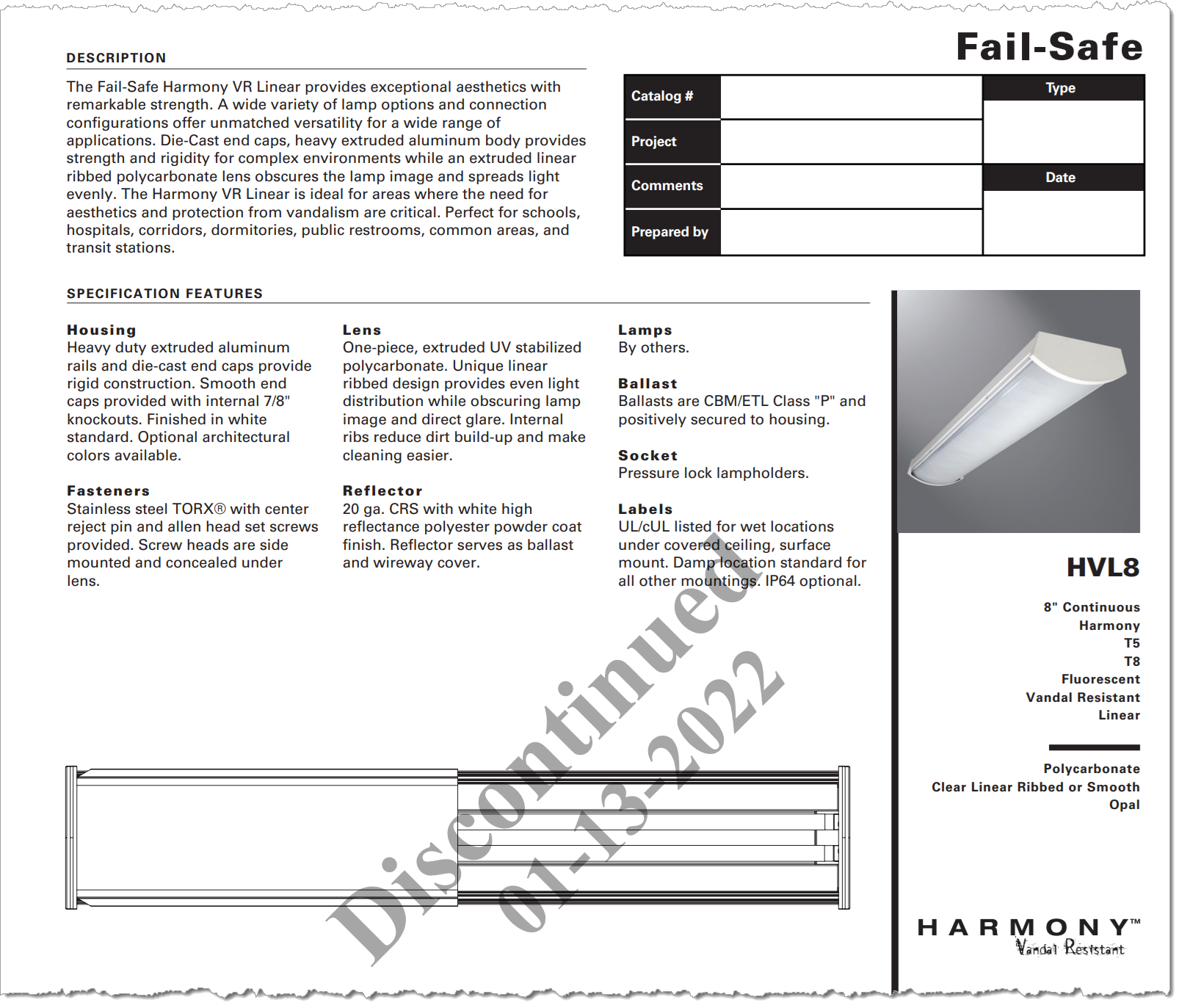
Above: The Fail-Safe Harmony Vandal-Resistant Linear fixture at the center of the dispute, since discontinued. Image credit: Cooper Lighting.
A Post-Trial Push That Went Nowhere
After Judge Durkin's ruling found that Cooper had breached a 2007 settlement agreement and infringed Kenall's patents on modular fluorescent fixture components, but declined to award the lost profits Kenall sought, Kenall pushed for more.

In April, Kenall filed four post-trial motions. It asked Durkin to find Cooper in ongoing breach over unpaid royalties on Fail-Safe HVL Continuous products and connector bands, to sanction Cooper under discovery rules for denying four requests for admission that Kenall later proved true at trial, to award prejudgment interest on its damages, and to recover fees tied to what it called Cooper's violations of a no-challenge clause in the settlement agreement.
Durkin rejected all four motions:
- On the breach claim: he noted Kenall had stayed silent about unpaid royalties throughout trial despite knowing about them, then tried to relitigate the issue after the court had already ordered Cooper to tender a $20,000 payment and Kenall's own counsel told the court that resolved the matter.
- On the sanctions motion: Durkin found Cooper had reasonable grounds for its denials, since the products' contract definitions were disputed well into trial.
- On prejudgment interest: he pointed to Kenall's own nine-year delay in filing suit, writing that awarding interest for that stretch would hand Kenall a windfall of epic proportion.
- On fees: he applied Illinois' rule that each side bears its own litigation costs absent a contract or statute saying otherwise, noting Kenall had already lost a similar fee request tied to the same conduct.
By the time the parties reached their agreement, they had already been through a bench trial, received detailed findings on liability, and watched a judge reject Kenall's push for more money not once but twice.
What followed looked more like negotiated cleanup than a leap into the unknown.
What the Settlement Does Not Say
What the settlement actually contains is not public. The stipulation states that each side will bear its own costs, expenses and fees, "except as provided for in the parties' settlement agreement." That single clause confirms a private deal exists. It does not say who paid whom, whether the royalty rates Durkin calculated in March survived into the final number, or whether nonmonetary terms were part of the package.
Fluorescent to LED, Filed to Closed
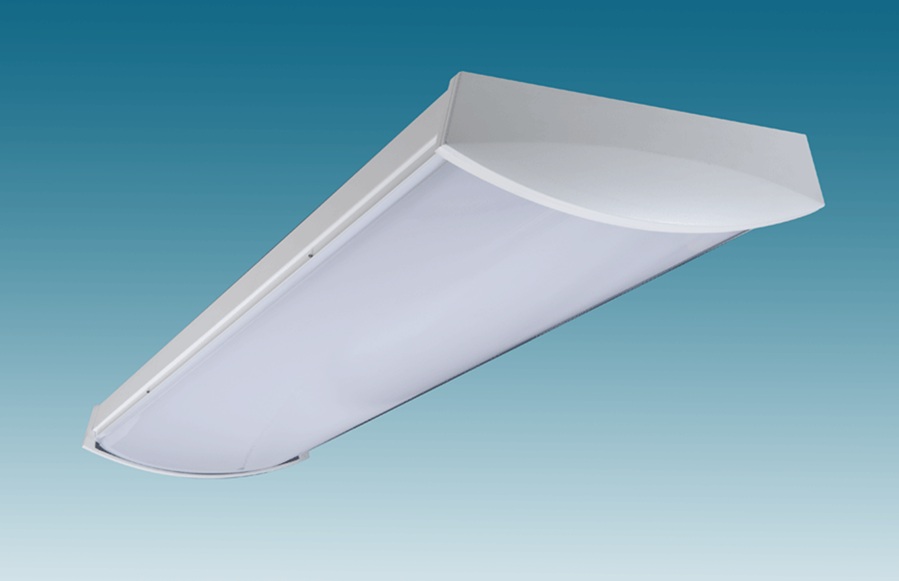
Above: The HVL Singles configuration named in the case. Photo credit: Cooper Lighting.
The infringement period at the center of the case ran roughly from 2009 to 2017, tied to fluorescent Fail-Safe Harmony Vandal-Resistant Linear fixtures that Cooper had already discontinued by the time Durkin ruled. The lawsuit itself extended nearly a decade longer than the technology's commercial relevance, through ownership changes at Cooper that took it from Cooper Industries to Eaton to Signify.
A patent dispute involving fluorescent luminaires that began as LED transformed the lighting market has finally ended by private settlement, nearly two decades after the products at its center first shipped.