


August 22, 2026
5 Things to Know: August 22
Added journalistic context escalates into a lavish exercise in self-praise. Plus, donated streetlights expose counterfeit scheme.
Here's a roundup of some of the week's happenings curated to help lighting people stay informed.
1. One Paragraph, Quite a Reaction
We saw Thursday that EdisonReport published a lengthy article claiming Inside Lighting had been “investigating” its publisher.
Our article wasn't about Randy Reid. It was about the Illuminating Engineering Society.
In prior reporting, EdisonReport had characterized IES's new management agreement with the National Lighting Bureau as one of the IES board meeting's “most significant announcements.” Our IES article provided readers with additional context:
-
NLB is a very small organization financially, and
-
EdisonReport did not disclose its publisher's affiliation with NLB when offering its glowing assessment.
That context is a matter of basic journalistic ethics, giving readers the information they need to independently assess both a new IES “revenue stream” and the enthusiastic coverage it received.
EdisonReport falsely states that we devoted “several paragraphs” to Reid personally. We didn't. He appeared in one paragraph near the end — paragraph #16 of a 19-paragraph article.
EdisonReport's 1000-word response is a remarkable escalation, turning a minor journalistic critique into an opportunity for extensive self-praise and personal, disparaging judgments about our motives and character, while largely sidestepping the two issues we actually raised:
-
Why a management deal with such a small nonprofit warranted “most significant” billing, and
-
Why its publisher's NLB affiliation wasn't disclosed.
Our article wasn't about him. It was about giving lighting people enough information to decide for themselves what was significant about the IES board meeting — and enough transparency to recognize when bias and advocacy may be shaping the "news" they read.
You can read our original IES26 coverage and decide for yourself.
2. Cree Lighting Property Listing Reveals More Detail
Inside Lighting reported in July that the former Cree Lighting USA campus in Wisconsin had hit the market. The full listing has since surfaced with new detail, confirming what county records already suggested: the 642,000-square-foot building belongs to Ideal Industries, not to any of the entities that have run operations there since. Ideal sold the Cree Lighting business itself back in 2023, retaining ownership of the real estate in what appears to be a leaseback arrangement that has persisted through the company's subsequent unraveling.
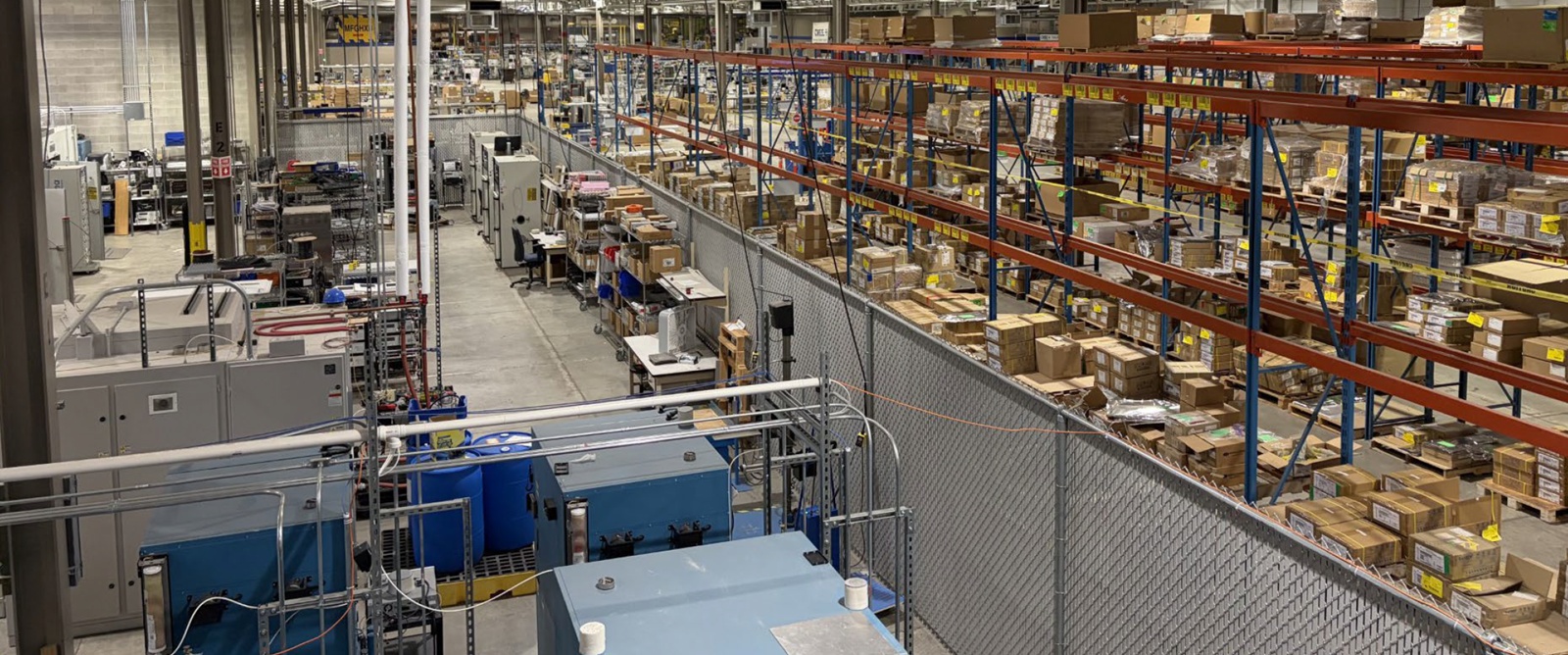
Above: Interior view of manufacturing and warehouse space now listed for sale following Cree Lighting USA's collapse. (Photo: Cushman & Wakefield | Boerke)
Cushman & Wakefield, the brokerage marketing the property, is asking $45 million. Listing materials lean on the site's manufacturing bones, a clean room, a 1.8 MW rooftop solar array, 44 dock doors, while treating Cree Lighting's collapse mostly as scene-setting for the next occupant. Principal Jeff Hoffman called the closure "disappointing" but framed the facility as a rare opportunity for reshoring manufacturers to skip years of construction delays.

3. Horticultural LED Pioneer Files For Bankruptcy
Founded in 2006, Heliospectra was among the earliest movers in tunable-spectrum, data-driven LED lighting for controlled-environment agriculture, developing its first dynamic fixture in 2010 and building a rare public window into the horticultural-LED segment as a Nasdaq First North listing under HELIO. That standing did not survive a financing search that ran out of time. The Gothenburg-based company's board has resolved to file for bankruptcy, citing an inability to secure funding needed to meet its obligations.
The collapse followed a familiar pattern for smaller public companies running out of runway. Weland Stål AB, which had been financing the company, told Heliospectra it would not continue as sole investor, and principal shareholders declined to participate in a further round on the terms proposed. No broader financing solution or new investor emerged in time.
Chairman Andreas Gunnarsson called the decision "extremely difficult," saying the board and management had spent an extended period evaluating alternatives before concluding bankruptcy was the only remaining option.
4. Donated Lighting Turns Into Fraud Investigation
Counterfeit lighting has plagued the U.S. market for years, but the fakes causing headaches this time surfaced much closer to the source.
According to Chinese trade publication A Lighting, a charitable donation of streetlights in Yangchun, Guangdong turned into a fraud case after all 350 units arrived as counterfeit products, lacking a manufacturer name, address, or quality certification. The donor had paid ¥330,000 ($49,000 USD) through what it believed was a legitimate channel, a Foshan-based supplier, intending to improve rural lighting access.
Yangchun's market regulator has opened an investigation and referred the case to counterparts in Foshan. The per-unit price worked out to roughly ¥942.86 ($140 USD), and industry commentators cited by A Lighting noted that after tax, transport, and installation costs, the real product cost three years ago may have been closer to ¥600 ($89 USD), a gap that left little room for legitimate manufacturing.
The case drew public criticism online, with commenters calling for strict penalties against counterfeiters. A Lighting framed the episode as a warning for the industry: charitable and public procurement, it argued, needs the same certification and inspection rigor as any commercial contract.
5. Smart Home Standards Group Expands Into Commercial
The Connectivity Standards Alliance (CSA), the industry group behind the Matter smart-home standard, used its recent Unify conference in Austin to spotlight commercial and industrial IoT as its fastest-growing focus, the group said in a press release. Open standards, it said, now target building automation and large-scale deployments once treated as separate from the smart home. The Alliance released Matter 1.6 and Product Security 1.1 at the event, the latter expanding certification beyond individual devices to cover apps, gateways, and remote management systems.
A session at the conference pointed to where that expansion is headed for lighting specifically. Panelists described DECT NR+, a long-range, license-free connectivity standard, as suited to emergency lighting networks in commercial buildings, where regulations often require dedicated networks and device counts can run high. Legrand's Bruno Vulcano noted the technology could address a persistent installation gap, distinct from Matter's home-focused emphasis.