


July 6, 2026
DOE Seeks New Path for Future Light Bulb Standards
A procedural rewrite lists light bulbs first among products the administration wants consumers free to choose
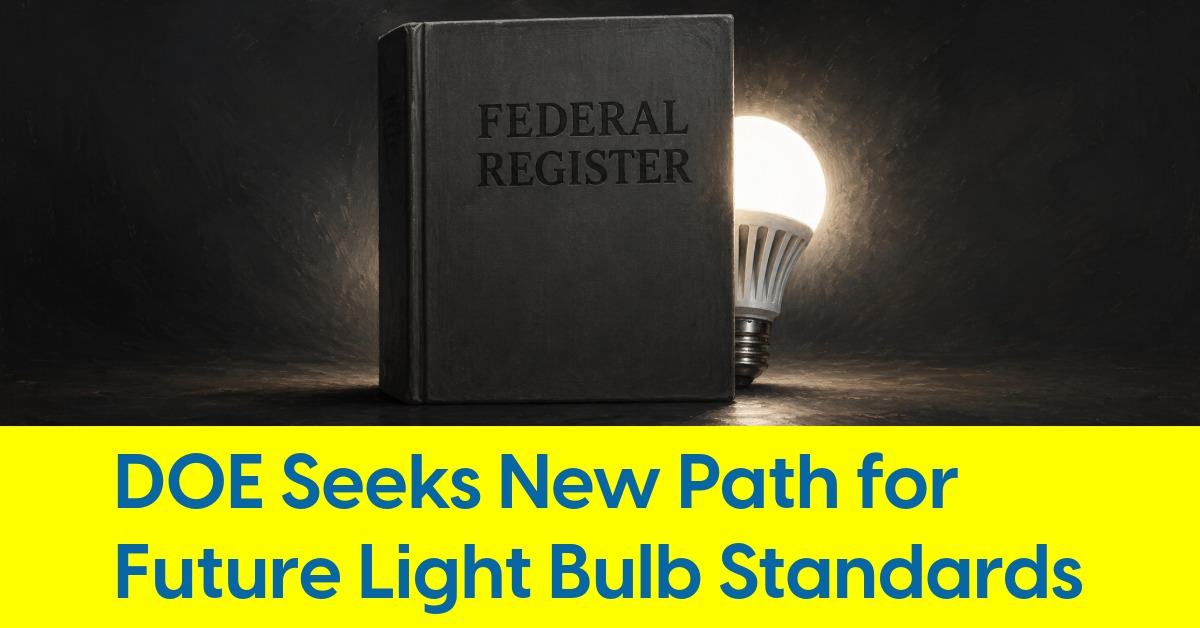
The headline the Department of Energy put on its July 2 announcement reads "Trump Administration Moves to Permanently End Green New Scam Appliance Mandates." The document underneath it is a rewrite of rulemaking procedure. Light bulbs, absent from that headline, appear in the proposal itself.
Secretary of Energy Chris Wright framed the action as relief for consumers stuck with dryers that need two cycles and appliances that cost more than they should. What DOE actually filed is quieter and, for our readers, more consequential. It changes how the agency proposes to write energy conservation standards going forward, and it names lamps as an example of what the administration wants consumers left free to choose.

Wright announced a Notice of Proposed Rulemaking that revises the Process Rule, the set of procedures DOE follows when it develops efficiency standards for appliances and equipment. A companion Request for Information, signed June 30 by Assistant Secretary Audrey Robertson, seeks comment on the analytical methods behind those standards. Neither action repeals or amends a single existing lamp standard.
The proposed changes run to the machinery. DOE would make portions of the Process Rule binding on itself for actions that increase stringency, restore a significant energy savings threshold that a 2021 revision had stripped out, reinstate comparative analysis when selecting efficiency levels, and place more weight on consumer choice and economic burden. It would also remove environmental emissions as a factor in deciding whether a standard is economically justified, a change the Request for Information states plainly. The promotional headline and the regulatory text are pitched at different audiences.
Where Lighting Comes In
Lamps are not the subject of either document, yet they sit in the text. The proposal cites the administration's policy of protecting consumer choice across "a variety of goods and appliances, including but not limited to lightbulbs, dishwashers, washing machines, gas stoves, water heaters, toilets, and shower heads." The companion RFI repeats the list. Light bulbs lead it both times.
That placement is why the filing lands on our desk. Existing lamp efficiency rules stay in force. What would change is the framework governing any future DOE action on lighting, and that framework now leans harder on consumer cost, demonstrated savings, and freedom to choose. For lighting people, the practical question is whether a standards process rebuilt around those priorities makes the next lamp rule harder to justify, slower to arrive, or both.
Four Administrations, One Phaseout
Historically, lamp efficiency standards carry signatures from both parties. President George W. Bush signed the Energy Independence and Security Act in 2007, requiring roughly 25 percent greater efficiency from household bulbs without banning incandescents outright. Regulations added during the Obama administration extended the phaseout to specialty lamps. The rules took full effect under President Biden, with retailers barred as of August 2023 from selling general service lamps producing less than 45 lumens per watt.
The precedent that matters for lighting sits in the middle of that timeline. In 2019, during President Trump's first term, DOE halted implementation of the Obama-era lamp regulations before a later administration revived them. That makes a Trump DOE reaching into lighting standards a matter of record rather than speculation. The agency did exactly that once, and the Process Rule rewrite is the machinery that would shape how it happens next.
What The Industry Has Already Said
The manufacturers asked for much of this machinery. In June 2025 comments on the earlier Process Rule RFI, a thirteen-group coalition that included National Electrical Manufacturers Association (NEMA), urged DOE to return "in whole or in large part" to the binding 2020 Process Rule and to restore the significant energy savings threshold, both of which the July NOPR proposes. Their argument, though, was for stability rather than for any single administration's agenda. The coalition warned that policy swings from one administration to the next help no one, and it pointed to the 1996 rule's two-decade run as the model.
Other related groups are on record too. Energy-efficiency advocates including the Appliance Standards Awareness Project and allied groups, along with state agencies from Hawaii and Washington, argued that the current rule already protects consumer choice and that repeated rewrites breed market uncertainty. Both camps get another turn now.
What To Watch
Nothing is required of lamp manufacturers today. The comment window on the Process Rule NOPR runs 30 days after Federal Register publication. The methodology RFI stays open 60 days, and it is the filing that will decide how heavily future analyses weigh consumer cost against energy savings.
We have watched efficiency fights in this industry turn on far less than a binding procedural rule. DOE will almost certainly reach lamp standards again. The question worth watching is how high (or low) this rewrite sets the bar when it does, and whether the agency that halted lamp rules once already means to make the next reversal harder to undo.