


August 3, 2026
Retrial Slashes $31 Million LED Tube Damages by Over 90%
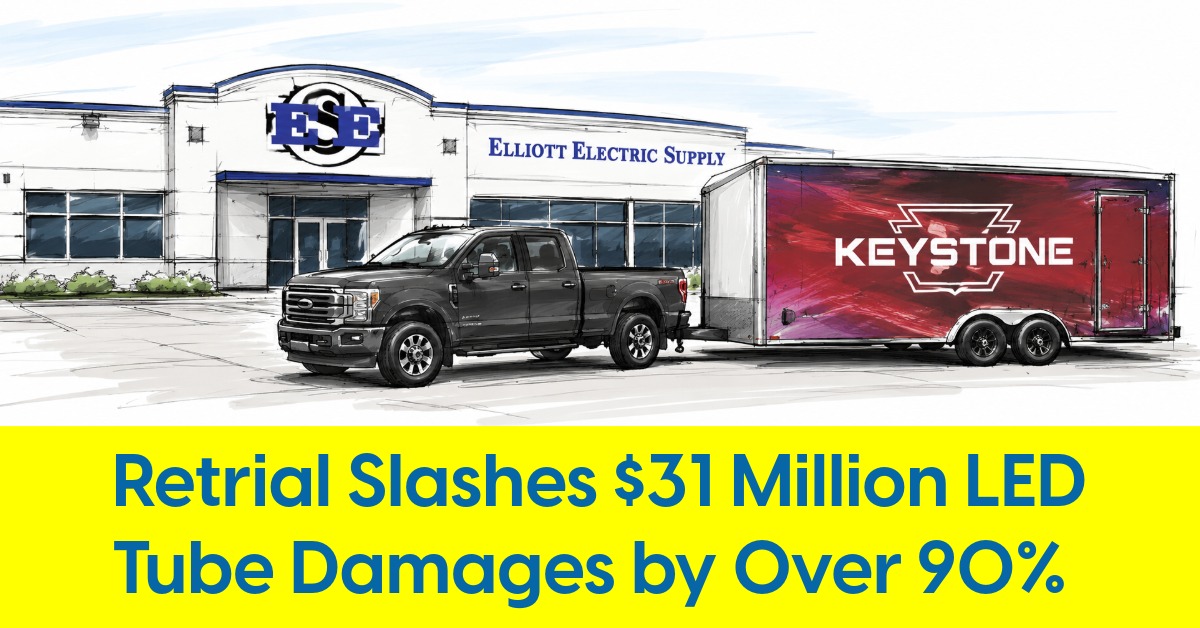
Jury dramatically reduces the financial impact on CH Lighting and Elliott Electric Supply.
A federal jury in Waco has cut over ninety percent off a patent damages award that once ran in the tens of millions, delivering CH Lighting Technology Co. and Shaoxing Ruising Lighting Co. a verdict of $1,465,145 in past damages and leaving Elliott Electric Supply on the hook for $27,369.
The July 29 verdict form, filed in Jiaxing Super Lighting Electric Appliance Co. v. CH Lighting Technology Co., closes the second chapter of a patent fight that began in 2020 and briefly threatened to reshape how some electrical distributors think about the imported products sitting on their shelves.
The contrast with the original judgment is the story, though the comparison depends on which original number you use. The jury's first verdict, reached in November 2021, awarded $13,872,872 against CH Lighting and Ruising and $298,454 against Elliott.
Judge Alan Albright, who has since announced his retirement from the bench, then more than doubled that figure. In March 2023, he entered final judgment of $31,221,873 against CH Lighting and $359,016 against Elliott, adding enhanced damages tied to CH Lighting's willful infringement. Measured against either number, the jury verdict or the enhanced judgment, the retrial's $1.47 million is a fraction of what CH Lighting and Ruising owed the first time.
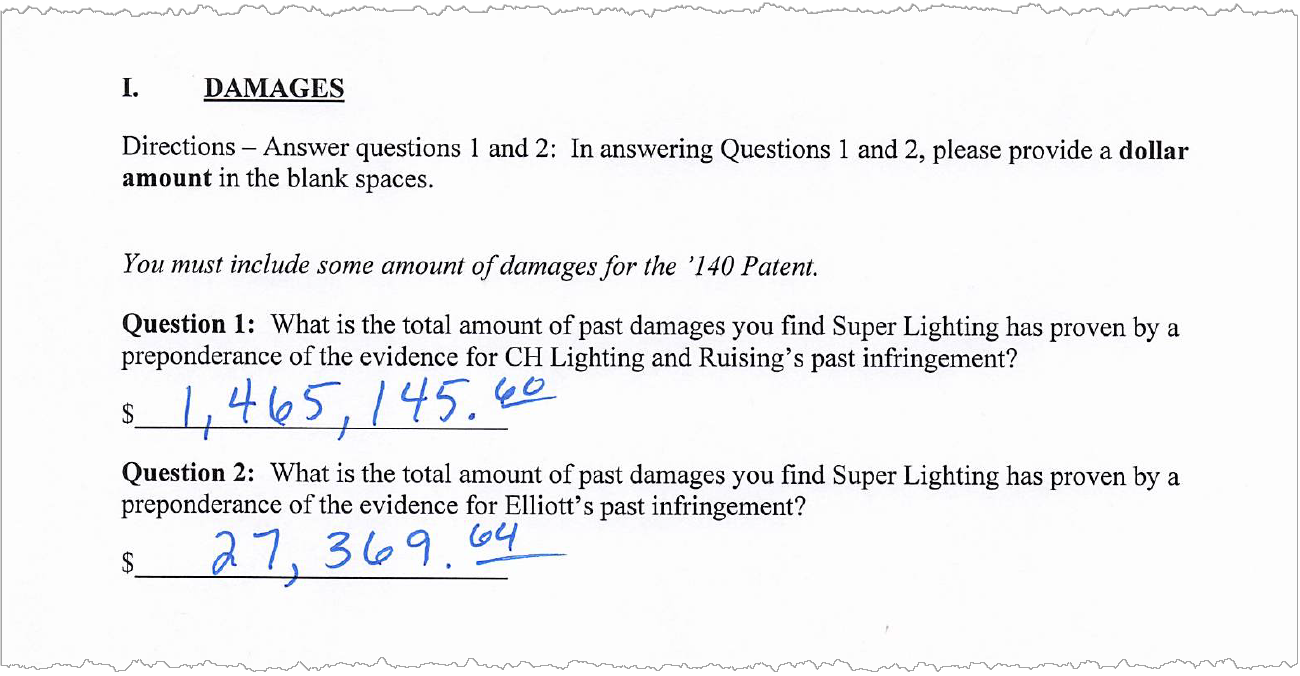
Above: The July 29 jury verdict form, showing the reduced damages awarded against CH Lighting and Elliott Electric Supply.
Roped In: The Brutal Reality
Elliott Electric Supply didn't design, engineer, or manufacture the LED tube that pulled it into federal court. It sold a Keystone-branded product built by CH Lighting, a vendor two tiers up the supply chain. Keystone itself was never a defendant in this case. CH Lighting was, along with its sales arm Ruising. Only Elliott, the distributor at the point of sale, and the two manufacturing entities behind the product ended up answering for it in the Waco courtroom.
That's the uncomfortable reality underneath a case like this: distributors buying from familiar, reputable brands can still get swept into patent fights they had no part in creating, while the brand whose name is on the product watches from the sidelines. Elliott may have ended up as a defendant partly because the case landed in Judge Alan Albright's Western District of Texas, a venue with a reputation among patent litigators as favorable to plaintiffs, and partly because it was a visible enough account to make an example of. But it could just as easily have been any of the dozens of other distributors moving similar private-label LED tubes in Texas.

No amount of engineering-side vetting catches a patent dispute happening between two OEMs behind the scenes; the real protection lives in the fine print of a vendor contract, in indemnification and IP-warranty language that puts the liability back where the underlying dispute actually originated.
Keystone itself may have done exactly the vetting a private-label deal calls for and still couldn't feasibly validate the IP underneath a product it didn't engineer. CH Lighting's customer list runs well beyond Keystone — a reminder that this kind of exposure isn't a one-brand problem, it's baked into how private-label lamp sourcing works.
What This Verdict Actually Covers
The reversal traces back to last July, when the Federal Circuit found the trial court had improperly excluded evidence suggesting Super Lighting's own patents may have been anticipated by products already on the market from Philips and MaxLite. Neither company was ever a party to the case. That ruling sent the matter back to the Western District of Texas.
The jury instructions in the retrial are specific in a way worth flagging for lighting people who assume the new number simply replaces the old one. The charge states that infringement of the '140 Patent "has not been shown to be invalid," treating validity as settled and leaving damages as the only question before the jury. That framing, and the final verdict, covers the '140 Patent alone.
Keystone's Fingerprints, Then and Now
Keystone Technologies was never a party to this lawsuit. It didn't need to be. The accused product tying Elliott Electric to the case in the first place was a Keystone-branded direct-wire T8 LED tube, manufactured, according to the underlying claims, by CH Lighting and sold through Elliott's counters. TCP and Ushio were also cited as private label manufacturers of accused products.
When we asked Bill Elliott in 2022 how a costly, multi-year lawsuit was affecting his relationship with the brand whose product had landed him in federal court, his answer was notably unbothered. Elliott told us his company "received great support from Keystone" and that the litigation would not affect future purchasing decisions. The remark took on a different color once Elliott told us Keystone had covered the company's legal costs outright, prompting his line that "the only thing we really lost was a whole bunch of time."
Keystone surfaces again in this retrial, in a different context. A sales deck Super Lighting filed as a trial exhibit two days before the verdict lists Keystone among its "key partners," alongside Philips, MaxLite, Halco, EiKO, Topaz, Espen, OSRAM, Panasonic, GE, and Satco. It's a private-label lamp ecosystem known well in LED lighting circles, described here in Super Lighting's own words as its customer base.
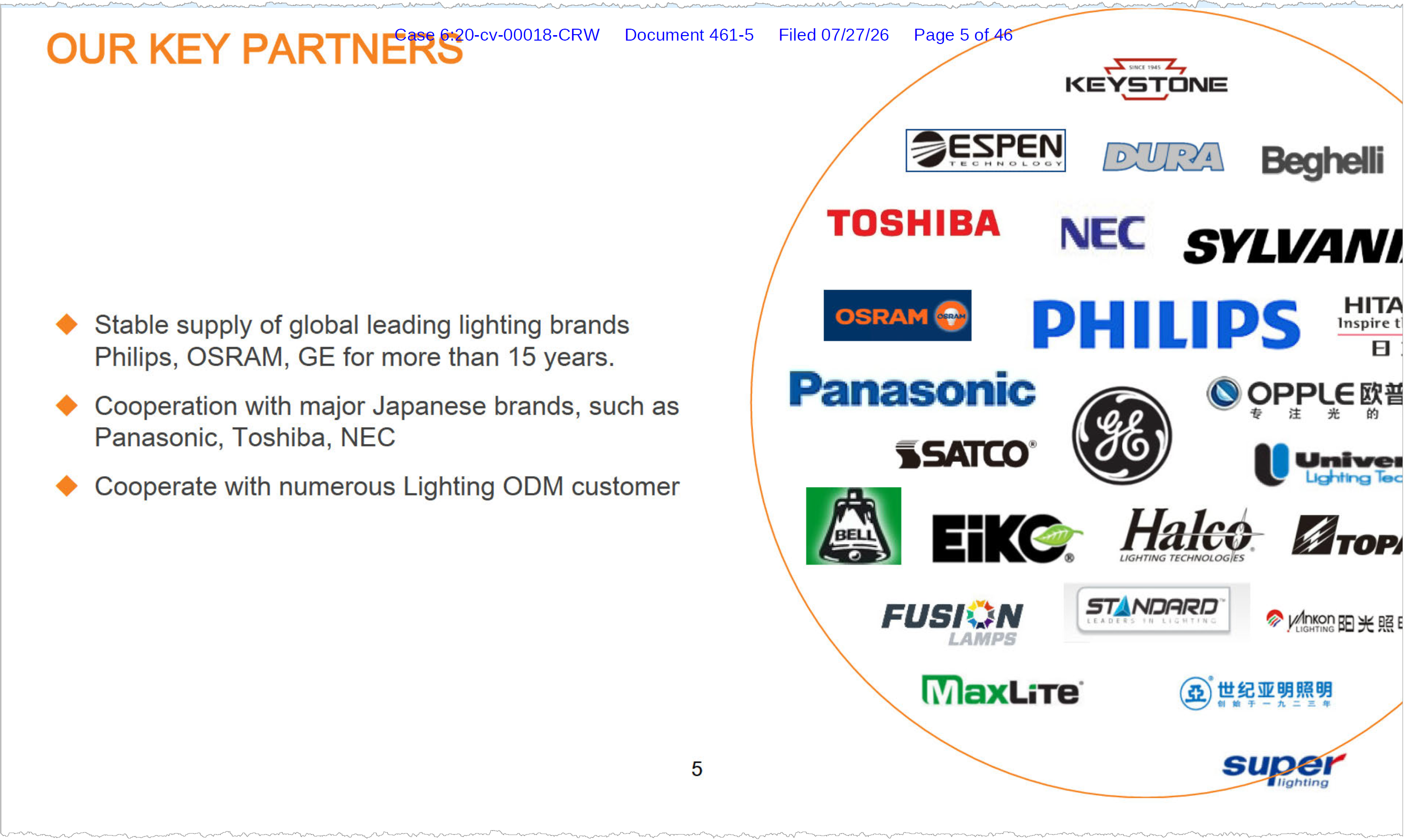
Above: A trial exhibit filed in the case lists the LED lamp brands Super Lighting cites as its "key partners."
Whether Keystone's arrangement with Elliott extended through this second trial, and whether Keystone was sourcing the accused product line from CH Lighting at the time this exhibit was filed, are questions the public record does not answer.
Why the Channel Should Pay Attention
The structural detail here is arguably more durable than any single damages figure. Two Chinese ODMs, both reportedly supplying the same familiar American brand name, ended up suing each other over the patents behind that supply.
For electrical distributors who buy on brand reputation, this saga is a reminder that a brand's name on a product often says very little about who actually built it, or what patent exposure came bundled in with the box.
Beyond the patent-scope question, it is not yet clear whether either side intends to appeal a second time, or whether the reduced figure reflects the jury crediting CH Lighting's non-infringement arguments, discounting Super Lighting's damages model, or some combination of both.