


October 22, 2025
Healthy Buildings as a Strategy, Not a Trend
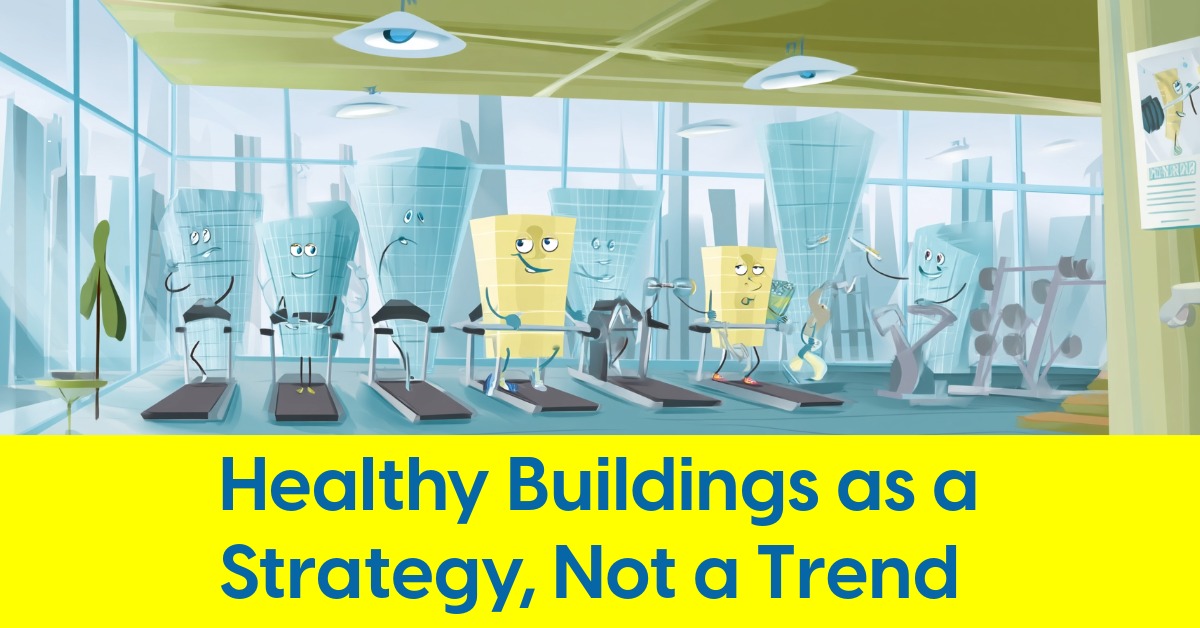
From circadian systems to daylight access, wellness is proving profitable
Lighting has always helped define how we inhabit a space — whether it’s a conference room or a cubicle. But now, more than ever, lighting is being tied to measurable outcomes: human well-being, workplace performance, and even real estate returns.
The International WELL Building Institute’s newly released report, Investing in Health Pays Back (Second Edition), piles on the evidence. With over 100 cited sources and a global outlook, the report sets out to quantify how healthy buildings — especially those that follow WELL Certification — aren’t just good for people, but good for business. Lighting, though not the report’s focus, plays a significant and surprisingly consequential role in that story.

To be clear, the IWBI report is not a lighting manifesto. It's a sweeping compilation of research linking health-oriented design strategies to improved productivity, reduced absenteeism, lower healthcare costs, and stronger financial performance. The report’s authors aim to make a decisive case: prioritizing people pays off, especially when it comes to building performance.
Among the many strategies discussed — ranging from air quality to mental health policies — lighting impacts makes several subtle appearances. Its impact, they argue, extends from workers’ sleep cycles to a building’s bottom line.
Lighting Strategies That Point to Results
Let’s start with daylighting. According to the report, New York City office spaces with high daylight levels command 5–6% rent premiums. The presence of windows and natural views correlates with a 6 - 12% boost in worker performance. On the flip side, windowless environments are linked to disrupted sleep and reduced productivity.
Biophilic design, another strategy flagged in the report, builds on that logic. Greenery and outdoor views don’t just boost mood — they also support cognitive function and lower stress. Offices with strong biophilic elements saw productivity gains valued at $36,471 per employee, per year. In a 200-person office, that’s a $7 million difference.
The report also cites circadian lighting systems — tuned to support natural sleep and alertness cycles — as part of the WELL Standard’s toolkit. WELL-certified spaces were associated with 10-point increases in perceived productivity. When environmental quality — including lighting — was enhanced, cognitive performance improved by up to 101%, according to one cited study.
Causation or Correlation?
Of course, there’s the elephant in the room: are WELL buildings outperforming because of health-centric design — or because they’re already top-tier properties? Many WELL-certified spaces are high-end to begin with, benefiting from strong leasing teams, prime locations, and modern amenities.
The report acknowledges this. Yet it maintains that specific design choices — like lighting that supports circadian rhythms or views that reduce stress — are driving measurable returns. In other words, healthy design may not be the only reason rents are higher, but it's part of a growing bundle of strategies contributing to that outcome.
For lighting designers and specifiers, the IWBI report offers data that supports long-held instincts: natural light matters, outdoor views matter, and so does the thoughtful tuning of electric lighting. These aren't just aesthetic preferences — they’re strategies linked to better cognitive function, lower absenteeism, and stronger lease performance.
For developers and building owners, the takeaway is sharper: lighting decisions can move the needle on everything from productivity to asset valuation. In a real estate environment where investors increasingly look for ESG credentials and tenant satisfaction metrics, lighting is no longer background. It’s part of the pitch.