


February 14, 2026
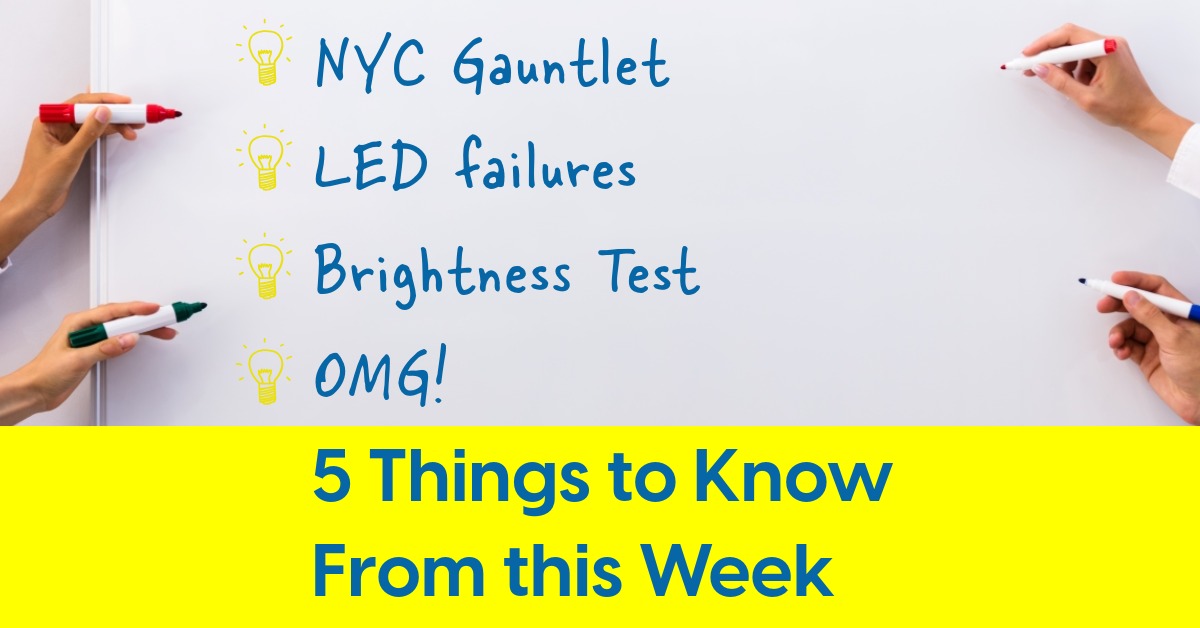
5 Things to Know: February 14
How lighting is a factor in the Guthrie investigation. Plus, engineered lighting drives 9% more milk.
Here's a roundup of some of the week's happenings curated to help lighting people stay informed.
1. Signify Launches Targeted Share Buyback Program
Signify has launched a new, smaller share repurchase program, authorizing the buyback of up to 725,000 shares, valued at roughly €14.5 million at current prices. Announced February 13, the program will run through the end of April and is designed to cover obligations under long-term incentive and other employee share plans. The shares will be held in treasury.
The move follows last year’s far larger €150 million repurchase initiative, which spanned 43 weeks and resulted in 7.1 million shares acquired. Of those, 5.76 million were canceled, reducing outstanding shares by about 5.5%, while 1.35 million were retained for employee compensation.
By comparison, the 2026 program is narrower in scope and shorter in duration, focused specifically on meeting equity compensation commitments rather than materially altering the company’s capital structure.
2. Lighting Conditions Reportedly Affect Guthrie Case
The heartbreaking news surrounding missing Nancy Guthrie in Tucson has drawn sustained community attention over the past two weeks. Many aspects of the case have been reported. Most recently, the local CBS affiliate, KOLD News 13, examined how lighting conditions in the Catalina Foothills may be affecting the investigation.
According to a report from KOLD, investigators reviewing doorbell and residential surveillance footage face challenges due to low ambient light and widely spaced homes. Former FBI official Andy Black told the station that limited street lighting can reduce image clarity and camera coverage at night, complicating efforts to obtain usable video evidence.
Four months ago, just three miles from Guthrie’s home, the International Association of Lighting Designers held its 2025 conference in the Catalina Foothills, a region known nationally for its carefully managed nighttime environment. Tucson area is also home to the headquarters of DarkSky International, the leading organization committed to limiting light pollution.
Tucson’s strict outdoor lighting codes were designed to protect nearby observatories, including Kitt Peak National Observatory, Mount Lemmon SkyCenter, and Steward Observatory. Requirements include fully shielded fixtures, limits on total lumens per property, curfews for nonessential lighting, and restrictions on blue-rich light. Widely viewed as a national model, those policies now form part of a complex backdrop to an ongoing investigation.

3. Higher Lighting Rebates, Shifting Programs
Commercial lighting rebates remain active in 2026, and rising power costs are driving renewed urgency. In its annual rebate rundown, BriteSwitch highlights several notable shifts:
- Electricity costs are climbing. According to the U.S. Energy Information Administration, commercial electricity rates rose roughly 7% in 2025, with some regions experiencing increases as high as 29%, reinforcing the financial case for energy-efficiency upgrades.
- Rebates still cover most of the country. About 75% of the U.S. has an active commercial lighting rebate program, down slightly from 77% last year. New York eliminated statewide C&I lighting incentives at the end of 2025, marking a notable shift in a major market.
- Incentive amounts are rising. Average prescriptive rebates increased 17% year-over-year, with HID replacement categories up more than 30% and screw-in HID replacements climbing as much as 38%, signaling utilities’ continued focus on high-wattage reductions.
The full 2026 Lighting Rebate Trends report is available at briteswitch.com.
4. A Hole Lot of Illumination
Per a WRDE I-Team report, the property manager overseeing the Surf Bagel shop says the debate in Fenwick Island, Delaware has shifted from toasted to code-compliant.
Balsamo Real Estate LLC is appealing a $33,250 lighting fine assessed by the Town of Fenwick Island after officials said exterior fixtures at the Surf Bagel property violated town code. The fine, issued in March 2025, reflects $250 per day over 133 days.
Town leaders cited Chapter 102-4(C), requiring fully shielded lights within height limits, and Chapter 102-8(A), prohibiting lights from directly illuminating neighboring properties. The fixtures were installed in December 2024.
After discussion, the council voted to reduce the fine to $6,000. The amount must be paid within 30 days or the penalty will revert to the original $33,250.
5. Cow-centric Lighting
According to Wales Farmer, DairyLight’s next-generation barn lighting system is being positioned as a biological intervention, not just an infrastructure upgrade. Launched at Dairy-Tech 2026, the system builds on earlier trials that reportedly reshaped herd performance.
Blue days. Red nights. 9% more milk. https://t.co/Cr9SSH2uiU
— Inside Lighting (@InsLighting) February 14, 2026
- 9% Yield Increase: The company says its first-generation lighting delivered an average 9% milk yield increase per cow — a margin that scales meaningfully across large dairies.
- Circadian Engineering: Blue-enriched white light for 16–18 hours simulates long summer days to influence milk-producing hormones.
- Red Light Strategy: Cows cannot perceive red light, allowing nighttime staff visibility while animals remain in a physiological “dark” state.
- Hormone Dynamics: Darkness raises melatonin, which suppresses cortisol — linking lighting to stress, immune and metabolic regulation.
- Automated Dimming: Built-in sunrise and sunset transitions aim to reduce winter yield drops and minimize stress from abrupt changes.
- Reproductive Impact: DairyLight also cites improved fertility, shorter calving intervals and stronger bulling activity, reframing lighting as a production and reproductive management tool.