


February 18, 2026
A.I. Regulation Debate Looms Over Distribution
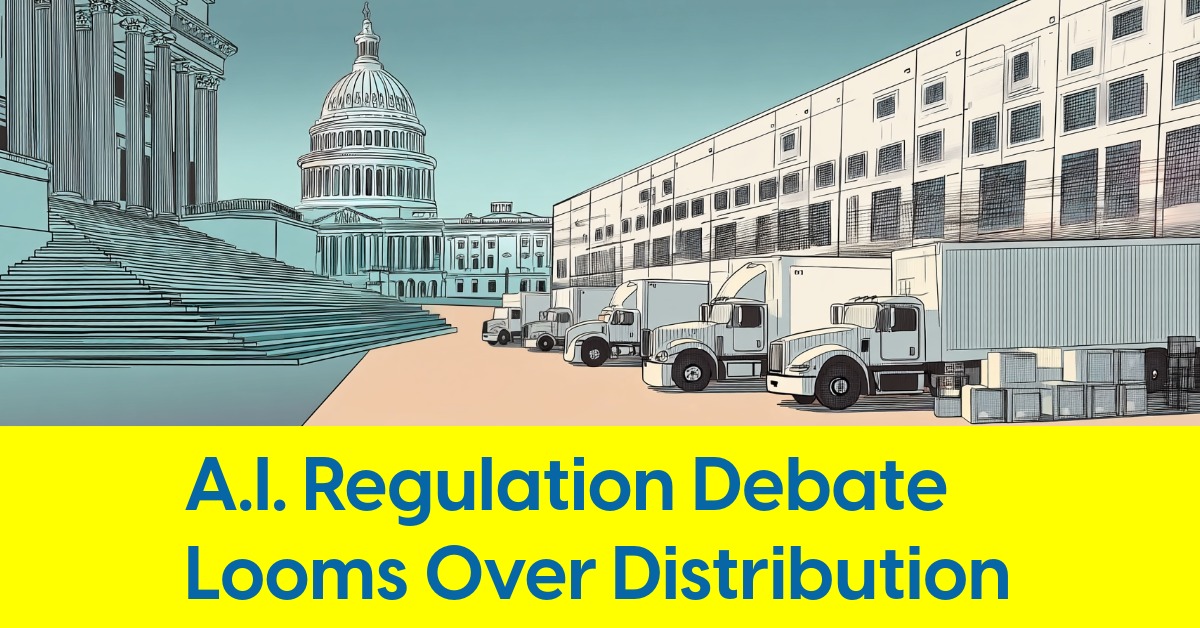
What happens in Washington D.C., may soon reshape what happens inside the DC
Across industries, businesses are recalibrating how they operate in the new AI era. Lighting and electrical distributors are no exception. From predictive inventory models and automated order fulfillment to AI-assisted quoting and AI-enabled sales tools, the channel is quietly rewiring core processes in pursuit of speed, accuracy and margin protection.
For now, much of that AI deployment sits in a regulatory gray zone. The tools are advancing faster than the rulebook. But a looming question hangs over the industry: What happens if government steps in with guardrails that unintentionally slow the very productivity gains distributors are banking on?

That question surfaced publicly on February 11, when the U.S. Subcommittee on Workforce Protections convened a hearing titled “Building an AI-Ready America: Safer Workplaces Through Smarter Technology.” Among the four witnesses was Eric Hoplin, President and CEO of the National Association of Wholesaler-Distributors, representing a channel that is already deploying AI inside warehouses, distribution centers (DC), and supply chain operations across the country.
Hoplin’s Warning: Patchwork Regulation, Real Costs
The most direct message for distribution executives came from Eric Hoplin. Hoplin argued that fragmented state-by-state regulation could create major inefficiencies for distributors operating across multiple markets. He framed it as a practical business problem for wholesalers and distributors:
“Do I have to hire attorneys and accountants just to make sure I’m following all of those rules [state by state]? If my distribution center is in Minneapolis and Minnesota has one set of regulations, but Wisconsin has another, that patchwork increases the barrier to entry. It reduces innovation, and many smaller distributors will simply wait before deploying new technology.”
— Eric Hoplin, President and CEO
National Association of Wholesaler-Distributors
Hoplin reinforced the scale of the concern, noting that most distributors lack the compliance departments of national tech firms. “80% of the industry are small businesses. They have 20 employees or less. They only have so many resources to deploy to new technology.”
The Reality Check: AI Is Already Inside Distribution
While Congress debates frameworks, major electrical distributors are already deploying AI at scale.
According to reporting by Distribution Strategy Group, Sonepar is executing a structured, enterprise-wide AI strategy. Don Sarno, SVP of Digital Enterprise Americas, outlined a governance model that includes a global AI Board overseeing budgets, solution portfolios, and responsible AI standards. Sonepar, with $16 billion in U.S. sales across 15 brands, is applying AI in pricing, cash-flow forecasting, order creation, and digital workplace productivity. Early machine learning efforts faltered due to inconsistent ERP data, prompting development of a national data platform to harmonize systems. Governance came before scale.
At Border States, the urgency was supply chain volatility. According to a GAINS case study, the sixth-largest electrical distributor in the United States, operating 120-plus branches in 29 states, deployed AI-powered lead time prediction tools that reduced inventory by $21 million within 6 to 8 months. Lead time accuracy improved by 65 percent. ROI reached 976 percent, with payback in just over a month. Predictive AI was not theoretical; it recalibrated working capital.
Graybar’s transformation has been equally deliberate. According to Deloitte, the distributor is modernizing its 20-year-old core system while integrating generative AI into sales and quoting workflows. AI now assists with cross-sell and upsell recommendations, and quoting cycles that once took hours or days can take minutes. But CFO David Meyer emphasized a prerequisite, telling Deloitte: “It makes you realize how important it is to have a clean data layer.” Data standardization preceded automation.
In each case, the pattern is clear. Data governance first. Narrow use cases. Human oversight.
Why This Hearing Matters to Electrical & Lighting Distribution
The lighting and electrical channel is already deploying AI across supply chain optimization, ERP modernization, purchase order automation, predictive analytics, Copilot integrations, and data governance frameworks. The technology is embedded in daily workflows.
Congress is just beginning to debate the regulatory perimeter.
That gap, between operational adoption and policy formation, is where channel strategy now lives. Too little guidance invites uncertainty. Too much fragmentation invites hesitation.
The February 11 hearing was framed around safer workplaces. For electrical distributors, the more pressing question may be simpler: Will regulatory clarity accelerate adoption, or will complexity slow the very safety and efficiency gains lawmakers say they want?