


June 27, 2026
5 Things to Know: June 27

LED lamp production returns to U.S. soil. Plus, Current's optical design comes under scrutiny.
Here's a roundup of some of the week's happenings curated to help lighting people stay informed.
1. Made in USA Bulbs
GoodBulb has opened what it describes as the only U.S. factory dedicated to A19 LED bulb production, located in Fargo, North Dakota, with initial sales targeted for July 4. The announcement arrives against a backdrop of steady domestic lamp manufacturing contraction that left the United States without a major American-made light bulb operation.
The closures came in waves.
- Philips Lighting (now Signify): Philips Lighting closed its Bath, New York, lamp plant in March 2014 before shutting its last U.S. lamp plant in Salina, Kansas, in the second quarter of 2021.
- LEDVANCE (formerly OSRAM Sylvania): By the end of 2019, LEDVANCE had closed its last U.S. lamp plants in Versailles, Kentucky and St. Marys, Pennsylvania, ending its domestic lamp manufacturing.
- GE Lighting: In March 2022, owner Savant announced the closure of GE Lighting's last U.S. manufacturing plants: Bucyrus, Ohio, which produced residential incandescent, halogen, and fluorescent lamps, and Logan, Ohio, which made glass. The closures began around September 2022, ending American-made GE light bulbs.
GoodBulb's Fargo facility is designed to produce more than 10,000 bulbs per shift. The company, founded in 2015, serves property and facility managers, contractors, and electrical distributors, and carries specialty incandescent lamps alongside its LED line. Rough service T8 replacement tubes run $259.87 for a 25-pack and "rugged condition" A19 LED lamps are $49.87 for ten.
Founder Tom Enright said he traveled internationally to study bulb manufacturing before bringing production stateside. "A country should be able to manufacture something as fundamental as its own light," Enright said.
2. Current Lighting's Optics
Current Lighting Solutions is facing a patent infringement lawsuit filed June 22 in the U.S. District Court for the Western District of Texas by Ultravision Technologies, LLC, a Dallas-based maker of LED displays and fixtures.
The 61-page complaint alleges that Current's Beacon RAR2 Ratio area light and other products with Type II, III, and IV optic distributions infringe four Ultravision patents covering LED array and optical element configurations. Ultravision is seeking a permanent injunction, damages no less than a reasonable royalty, and enhanced damages on willfulness grounds.
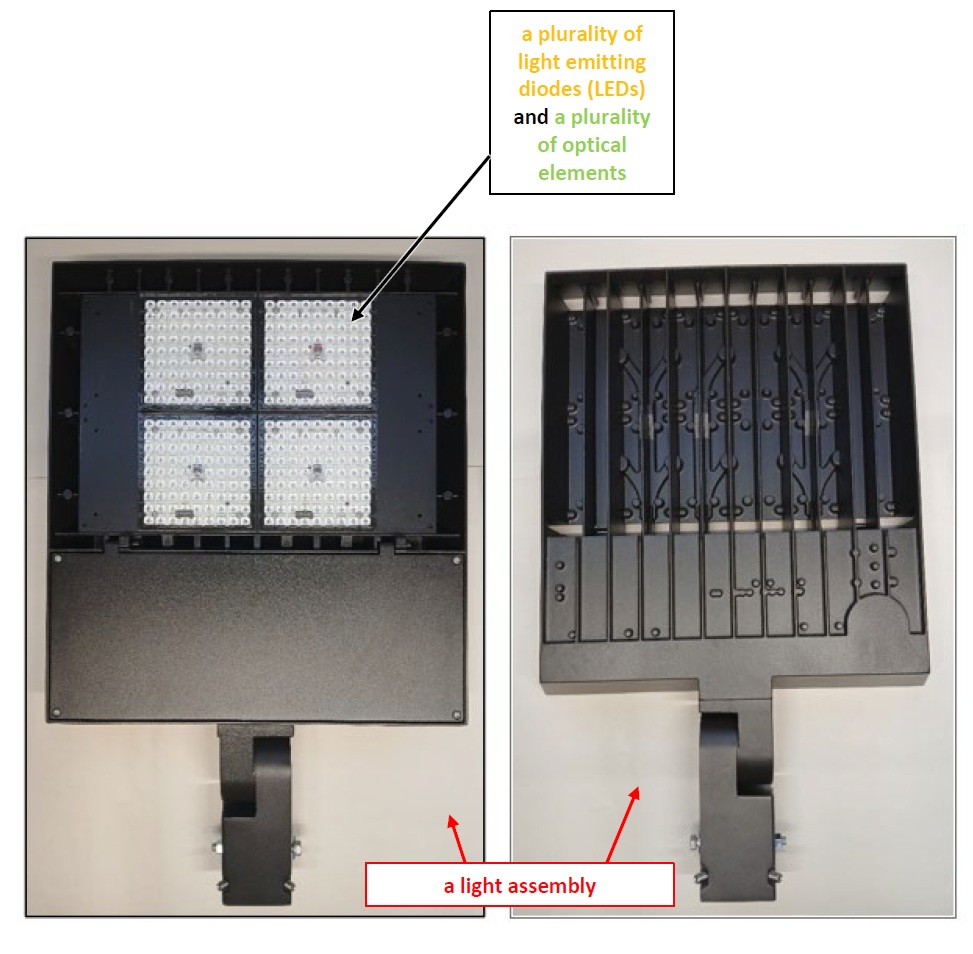
The filing is notable for its detail. Ultravision's attorneys devoted the first nine pages to establishing that the Western District of Texas is the proper venue, documenting Current's Austin-area facilities, employee recruiting activity, and distributor relationships in the Midland market. Current was served June 24 and has until July 15 to respond.
A Current spokesperson declined to comment.

3. The Case for Lighting Design
"When you see bad lighting, it's because they didn't use a lighting designer."
Christine Vandover, a principal at HOK, delivered that verdict to The Architect's Newspaper in a piece published June 15 that reads less like a trend survey and more like a brief for the prosecution. The defendant: every project that skipped the lighting consultant.
L'Observatoire International anchors the story. Founder Hervé Descottes, whose firm has illuminated Disney Concert Hall and the Met facade, frames the consultant's role in terms that go beyond foot-candles and fixture schedules. "I never work to 'light' a space," he told AN. "I want the light to confirm the space." The piece threads in work from TM, HLB, Studio Atomic, and Loop Lighting, each representing a different sector pull: hospitality, university athletics, retail, spa recovery.
The throughline is economic as much as aesthetic. Hiring a lighting consultant, the piece argues, may cost less than skipping one.
4. L.A. Voters Nix Streetlight Funding
With roughly 26,000 streetlights dark at various points in recent years, repair timelines stretching to a full year, and copper wire theft up 1,200% over the past decade, Los Angeles put a straightforward question to its property owners: will you pay more to fix this?
They said no.
The L.A. city clerk certified results Wednesday showing that nearly 80% of weighted votes cast rejected a proposed assessment increase. More than 580,000 parcels received ballots in April. Fewer than 30% were returned. Among those who responded, the rejection was decisive.
According to LA's NPR station, LAist, the Bureau of Street Lighting currently collects roughly $45 million annually through property assessments, a number essentially frozen since the 1990s. City officials had calculated that meeting actual infrastructure needs would require nearly $112 million in the upcoming fiscal year. Bureau head Miguel Sangalang had said adequate funding would bring simple repair timelines from one year down to one week.
Without new revenue, the one-year wait stands. Mayor Karen Bass and city council leaders issued a joint statement pledging continued commitment to the network. What funds that commitment remains an open question.
5. DOE vs. Energy Codes
The U.S. Department of Energy escalated its criticism of the 2024 International Energy Conservation Code on Friday, releasing an analysis that concludes nationwide adoption would increase residential construction costs by more than $9.2 billion annually compared to the 2006 code. DOE estimates cumulative added costs could exceed $127 billion, with construction costs for a typical single-family home rising by as much as $14,000 in states that adopt the latest code.
The department said projected energy savings often take more than a decade to offset the higher upfront costs, with payback periods exceeding 20 years in some states. Energy Secretary Chris Wright said the administration opposes energy code requirements that increase housing costs and limit consumer choice.
The announcement follows a letter DOE sent to the International Code Council urging the organization to refocus the next International Energy Conservation Code on energy efficiency and affordability. In that letter, DOE called on ICC to remove provisions related to greenhouse gas emissions, onsite energy generation and electric vehicle charging infrastructure from the code development process. It also urged the organization to adopt a more transparent cost-benefit methodology and rename the proposed "IECC-X" to distinguish it from the traditional IECC recognized under federal law.
DOE also announced a Request for Information seeking public input on its methodology for evaluating the consumer impacts of building energy codes.