


December 8, 2025
Zero Emissions Building Guidance Pulled by Department of Energy
Initiative no longer aligns with current administration's energy priorities
The U.S. Department of Energy (DOE) has formally rescinded its National Definition of a Zero Emissions Building (ZEB), ending federal support for a voluntary framework that had quietly influenced sustainability strategies across the construction and lighting sectors. The move, announced December 3 by DOE’s Office of Critical Minerals and Energy Innovation, eliminates a guidance document originally intended to serve as a shared national reference point for decarbonizing buildings.
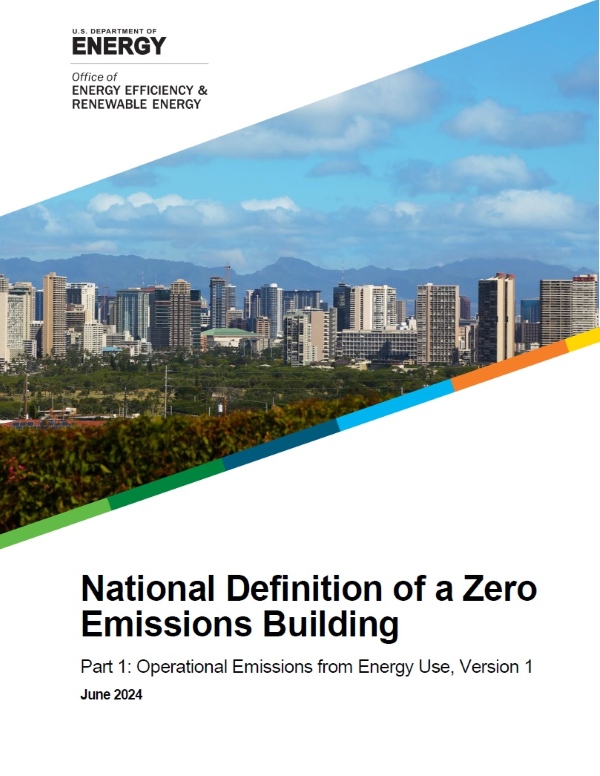
Above: Archived June 2024 DOE document that has since been removed from the DOE website
DOE’s notice states that the definition no longer aligns with the current Administration’s priorities.
Issued in June 2024, the ZEB definition outlined voluntary criteria for buildings aiming to achieve zero greenhouse gas emissions from operational energy use. It required buildings to meet three key standards: high energy efficiency, zero on-site emissions from energy use, and 100% clean energy sourcing, either on- or off-site.
The definition was not a regulation and carried no legal authority. It did not require compliance or impose penalties. Instead, it was a form of federal guidance — a reference tool for local governments, certifying bodies, architects, and owners who sought alignment with federal climate goals. While technically optional, its presence on DOE platforms and in technical assistance resources lent it considerable influence. Many viewed it as a soft standard — a directional cue for ESG strategies, green building certifications, and local code development.

Why It Was Revoked
According to DOE, the rescission aligns with shifting federal energy priorities under President Trump’s Executive Orders 14148 and 14154. These orders reverse several Biden-era climate directives and direct agencies to roll back guidance viewed as restrictive to domestic energy development.
The department has removed the definition from its website, ended technical assistance related to it, and discouraged state and local governments from referencing it. This represents a clear pivot away from decarbonization frameworks rooted in the previous administration’s climate policy.
What This Means for Lighting Stakeholders
Though the ZEB definition never specified lighting technologies, it provided a structure in which high-efficiency lighting, networked controls, and clean power integration were seen as contributing factors in meeting zero emissions goals. For specifiers, engineers, and building owners, the definition offered a credible — if non-binding — justification for sustainable design decisions.
With the federal government stepping back, lighting people can expect a more fragmented landscape. Yet demand for low-emission buildings continues from municipalities, global standards bodies, and investors. LEED, WELL, and Title 24 still incentivize some of the same strategies the ZEB definition once reinforced.
Inside Lighting has preserved the June 2024 version here for reference — a document now erased from federal archives but still relevant for those with an eye towards future building sustainability.