


March 11, 2026
IALD Awards Night Steps Onto A Global Stage
Projects from Asian and European design firms dominate the evening’s awards
On Tuesday night in Frankfurt, about 150 lighting professionals slipped away from the sprawling halls of Light + Building 2026 and gathered at an off-site venue called Depot 1899. The setting, a restored industrial space with brick walls and a sense of history, felt fitting for an awards program that has spent four decades celebrating the craft of lighting design.
The occasion was the 43rd annual International Association of Lighting Designers Awards ceremony, and this year carried a subtle but notable distinction. For the first time in its history, the event was held outside the United States. The move placed the ceremony squarely inside the orbit of the global lighting industry’s largest trade fair and, judging from the crowd, the international community responded.

A First For The Awards Program
IALD President Carla Wilkins, who lives in Germany, opened the evening by greeting the audience and acknowledging the significance of the moment. Numerous sponsor-hosted tables filled the front of the room, where corporate partners and invited guests sat alongside designers who had traveled from across Europe, Asia, and the Americas.
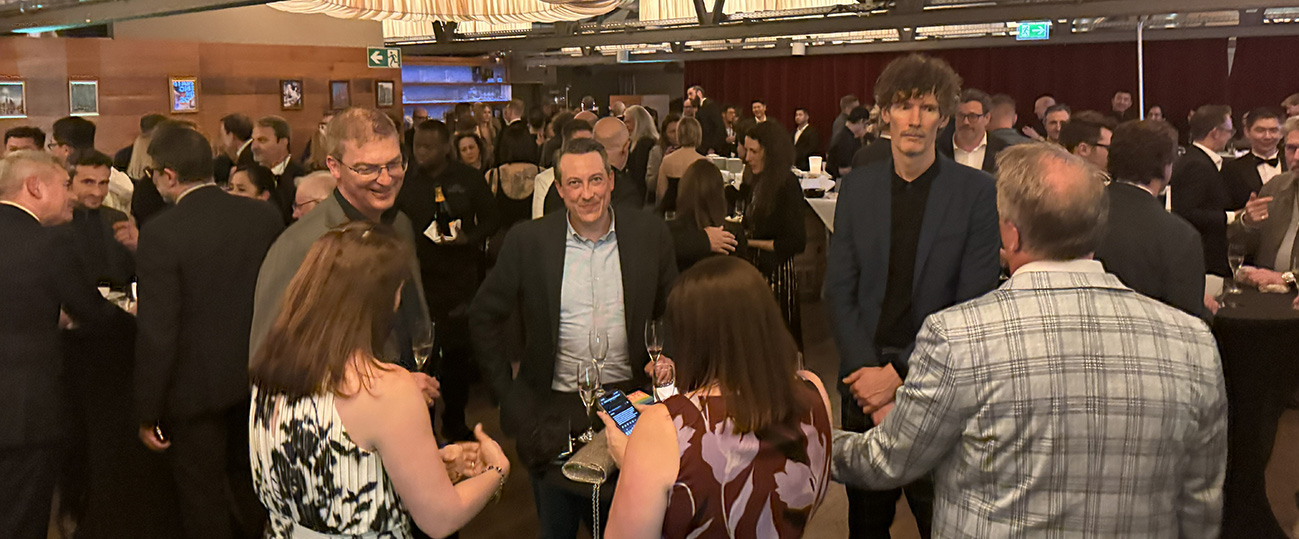
Above: Lighting people gather for the IALD International Lighting Design Awards
Wilkins noted that the awards program has long drawn an international field of submissions. But until now, the ceremony itself had always taken place in the United States. Holding it in Frankfurt during Light + Building signaled something else entirely: a profession that increasingly sees its work, its clients, and its influence as fundamentally global.
For the audience inside Depot 1899, that global shift was visible not only in the accents circulating during the cocktail hour but also in the projects that would ultimately take home the night’s honors.
Cologne Cathedral Claims The Top Prize
The evening’s top recognition, the Radiance Award for Excellence in Lighting Design, went to Licht Kunst Licht AG for its exterior lighting of Cologne Cathedral.

Photo Credit: HGEsch
The project tackles a familiar but difficult question for lighting designers working with historic landmarks: how to reveal architectural detail without overwhelming the structure or the night sky around it. According to the IALD, the redesign reduced energy consumption and light pollution while revealing significantly more of the cathedral’s intricate Gothic façade.
The jury saw something else in the work as well. It demonstrated how contemporary lighting tools can be applied to a monument that predates electricity by centuries without compromising its spiritual and civic identity. In a field increasingly focused on sustainability and restraint, the project struck a balance that resonated with the judges.
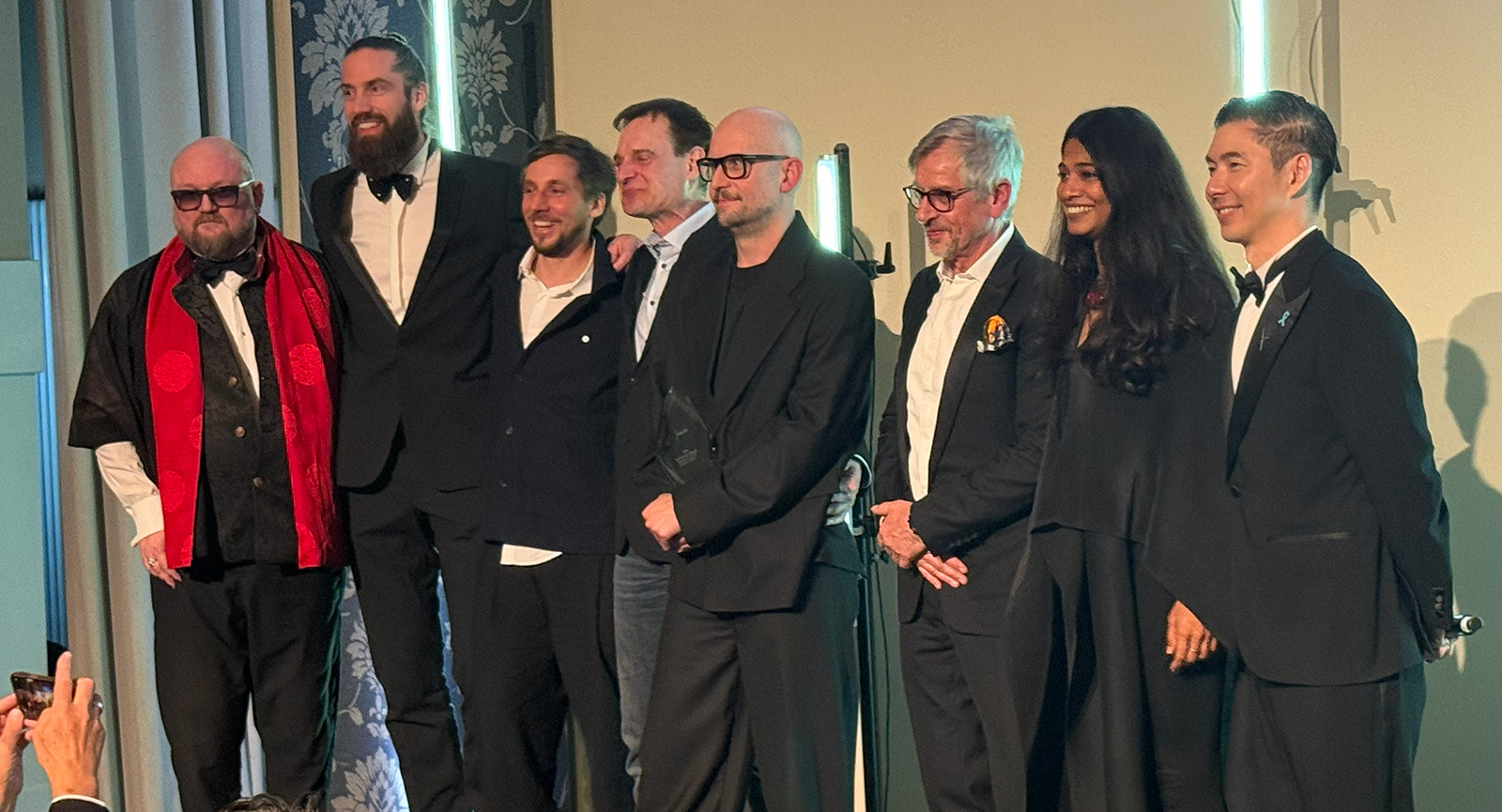
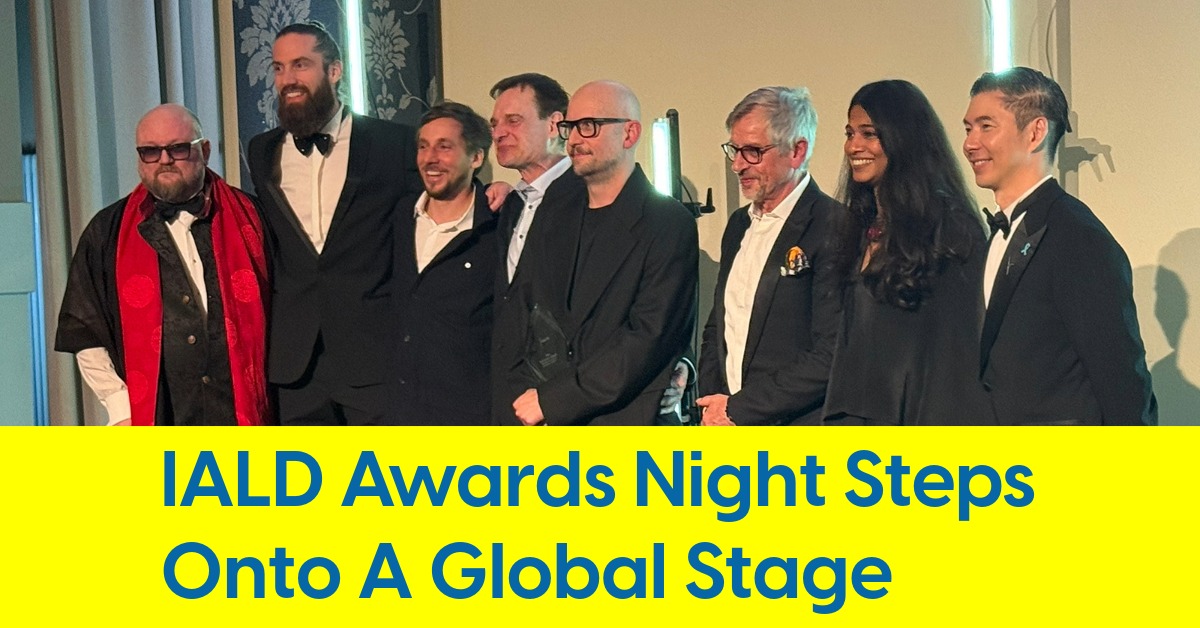
Above: Licht Kunst Licht AG accepts the Radiance Award
A Ceremony Dominated By Europe And Asia
A glance at the winners list told its own story. Firms and projects from Europe and Asia dominated the awards this year, reflecting where many of the world’s largest and most ambitious architectural developments are currently taking shape.
China alone accounted for several recognized projects, while work in the Middle East and across Asia featured prominently among the honors. Europe also held a strong presence, led by the German team behind the night’s top prize.
Only one North American firm received recognition this year: Buro Happold, honored for its lighting design for the Al Mujadilah Center & Mosque for Women in Doha, Qatar. The project itself, notably, is located overseas.
One firm managed a rare double appearance in the winners list. Beijing PRO Lighting Design received two awards for projects in China, underscoring the country’s growing influence in large-scale architectural lighting.
A Profession That Has Outgrown Its Borders
Awards ceremonies are often polite affairs, but the tone in Frankfurt suggested something more consequential. Lighting design, once perceived as a supporting discipline within architecture and engineering, has grown into a global profession with its own networks, recognition systems, and cultural influence.
The projects recognized Tuesday night stretched from sacred spaces and heritage monuments to resorts and memorials shaped by tragedy. Each reflects a different cultural context and design philosophy, yet all rely on the same fundamental medium: shaping darkness with precision.
For the designers gathered at Depot 1899, the evening carried a quiet acknowledgment of that shared craft. In a room filled with people who spend their careers making buildings glow after sunset, the awards offered a moment to pause, look outward, and recognize how global the profession has become.
And for a program that spent four decades rooted in the United States, Frankfurt felt less like a departure and more like an inevitable next step.