


May 11, 2026
LED Interiors May Be Missing Something Important

New research questions today’s narrowband indoor lighting environments
Before the light bulb, before the office tower, before the deep-plan building with its infrared-blocking glazing, human beings spent their days under something broader than what we now call light. Sunlight runs from roughly 300 to 2,500 nanometers. The visible slice that our eyes register occupies only a fraction of that range.
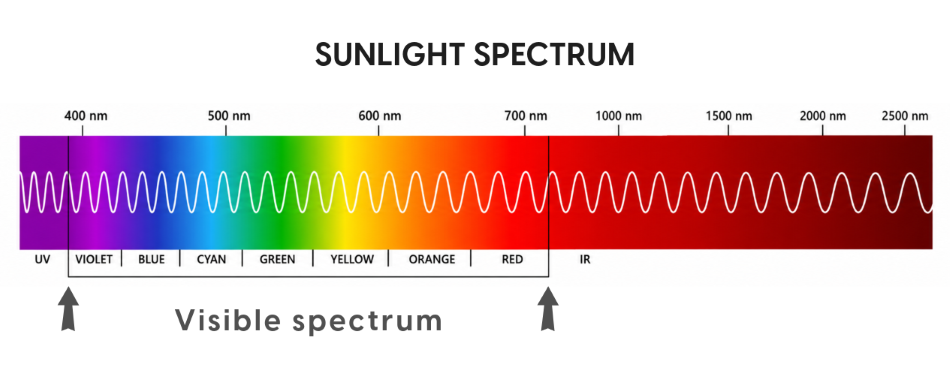
The rest of the sunlight spectrum, including the near-infrared that warms skin and, according to a growing body of research, appears to do something important inside our cells, came along for free.
Then we moved indoors. And the spectrum quietly shrank.

What The Study Found
A peer-reviewed study published in Scientific Reports by researchers at University College London adds a pointed data point to that shift. Working in a deep-plan building where infrared-blocking window film kept long wavelengths out entirely, the authors placed incandescent desk lamps alongside 22 workers already spending their days under standard LED overhead lighting. After two weeks, color contrast sensitivity, a measurable indicator of visual performance, improved by roughly 25 percent across both major visual axes. When the incandescent lamps were removed, the improvement held at four weeks and again at six.
The control group, working under similar LEDs without the supplemental lamps, showed no meaningful change.
The mechanism the researchers point to is mitochondrial. Standard LEDs are heavy in the 420 to 450 nanometer blue range and carry almost nothing above 700 nanometers. The authors argue that this spectral imbalance suppresses mitochondrial function in the retina, which has the highest metabolic rate of any tissue in the body, and that reintroducing longer wavelengths reverses some of that suppression.
Why Caution Still Applies
This is where careful reading matters. The study used only 22 subjects, conducted in a single location during the dark months of a UK autumn and winter, with subjects who had minimal daylight exposure and uncontrolled home lighting on weekends. The causal language in the paper is stronger than the sample size strictly supports. The authors use words like "undermines" in the title itself. That is a claim, not yet a consensus.
We have been watching this space. In November 2024, we covered research from the Journal of Environmental Psychology suggesting that near-infrared exposure improved mood and stress markers in controlled conditions, while also noting that cognitive effects were more complicated.
What the new UCL study adds is a real-world workplace setting, a broader spectrum intervention, and a durability result that prior narrow-wavelength experiments had not produced.
What The Industry Should Be Asking
For lighting people, the practical question is straightforward even if the science is not yet settled: as the industry accelerates toward spectrally efficient LEDs and infrared-blocking glazing becomes standard in commercial construction, what portion of the spectrum are we designing out? And at what cost?
The incandescent bulb is gone. The question it left behind is not.