


April 22, 2026
Cree Lighting Faces Sixth Lawsuit As Pressure Builds
Total vendor lawsuits now exceed $2 million in alleged unpaid balances
Cree Lighting is facing its sixth lawsuit in roughly five months. The latest comes from Fanlight Corporation, alleging $354,644 in unpaid invoices tied to products sold through the company’s e-commerce channel under the NaturaLED brand.
The case adds to a growing stack of legal pressure that now includes four vendor lawsuits and two employee class actions. Across four vendor lawsuits filed between December and April, Cree Lighting now faces more than $2 million in claimed unpaid balances.
The Six Lawsuits
Here’s the current lineup:
- December 4, 2025 — Pace Industries
~$138,314 in claimed unpaid invoices - December 29, 2025 — MES Inc.
~$1,382,418 in claimed damages (shipped goods + custom inventory) - February 16, 2026 — Mayville Engineering Company (MEC)
~$194,484 in claimed unpaid balances - March 19, 2026 — Employee Class Action #1
Alleged improper furloughs and lack of severance - March 19, 2026 — Employee Class Action #2
Similar claims tied to immediate terminations - April 20, 2026 — Fanlight Corporation (NaturaLED brand)
~$354,644 tied to a claim of more than 800 unpaid invoices
Four vendors are asking to be paid. Two groups of employees are asking how they were let go without notice. Without severance.
Fanlight did not respond to a request for comment. Cree Lighting declined to comment on the specifics of the case, citing its policy on active litigation, but said it expects to “positively, fairly and quickly resolve any disputes.”
What the Fanlight Case Shows
The Fanlight lawsuit provides the clearest view yet into how product was moving during the furlough period. According to the complaint, Fanlight fulfilled orders that were placed or administered through E-Conolight, Cree Lighting’s e-commerce arm, with goods shipped directly to customers while invoices were billed to Cree Lighting.
These transactions were widely understood to be tied to e-commerce activity on the E-Conolight website, including NaturaLED-branded fixtures. The channel appeared active, with orders continuing to flow, even as at least one supplier now alleges that payment did not.
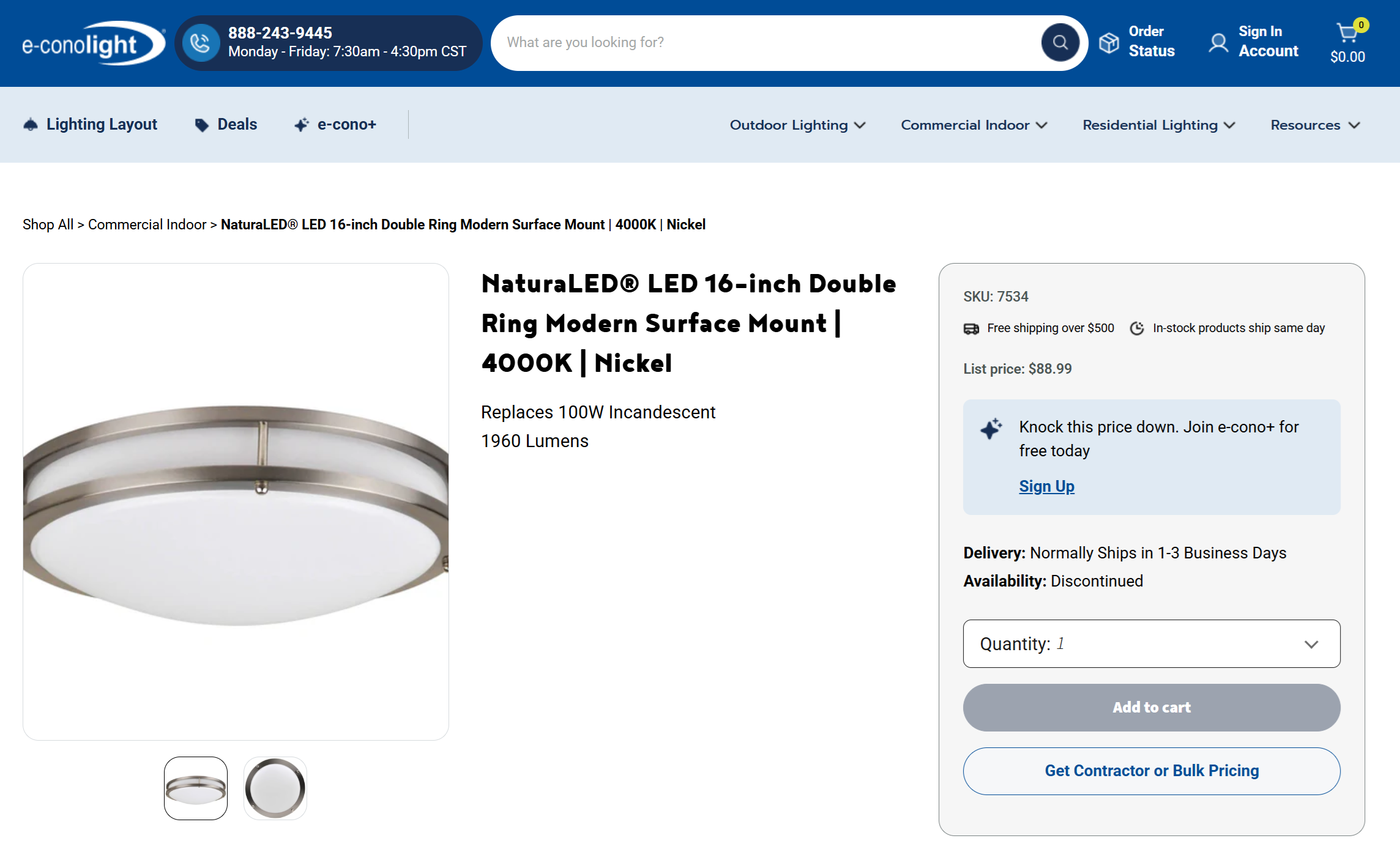
Above: Landing page for NaturaLED fixture on e-conolight.com
Nearly all Fanlight drop-ship orders cited in the lawsuit occurred between September 25, 2025 and January 14, 2026. Then they stopped.
That window overlaps directly with Cree Lighting’s extended furlough period. While operations were publicly described as limited, the transaction record points to sustained order activity moving through the e-commerce channel before an abrupt cutoff in mid-January.
The February Pivot, Reconsidered
In late February, Cree Lighting announced a new direction: the company shifted production to a Wisconsin-based partner as part of a broader recovery plan. Cree later said it had identified manufacturing inefficiencies that led to subsequent layoffs and restructuring.
That explanation deserves a closer look.
Companies do not typically wake up after decades and suddenly discover that their core manufacturing model is inefficient. Those realizations tend to surface gradually, through years of cost pressure, process improvement, and operational review.

The timing here is what draws attention. The pivot arrives after months of furloughs, during a period when multiple vendors are alleging unpaid balances, and alongside filings that suggest strain in supplier relationships.
There is a more practical question circulating among lighting people: when vendors become hesitant to extend credit, what options remain? One is to reduce the number of suppliers. Another is to consolidate production with a partner willing to operate under a different financial structure.
Cree Lighting has framed the move as an operational improvement. The lawsuits provide context that may also point to financial and supplier dynamics shaping that decision.
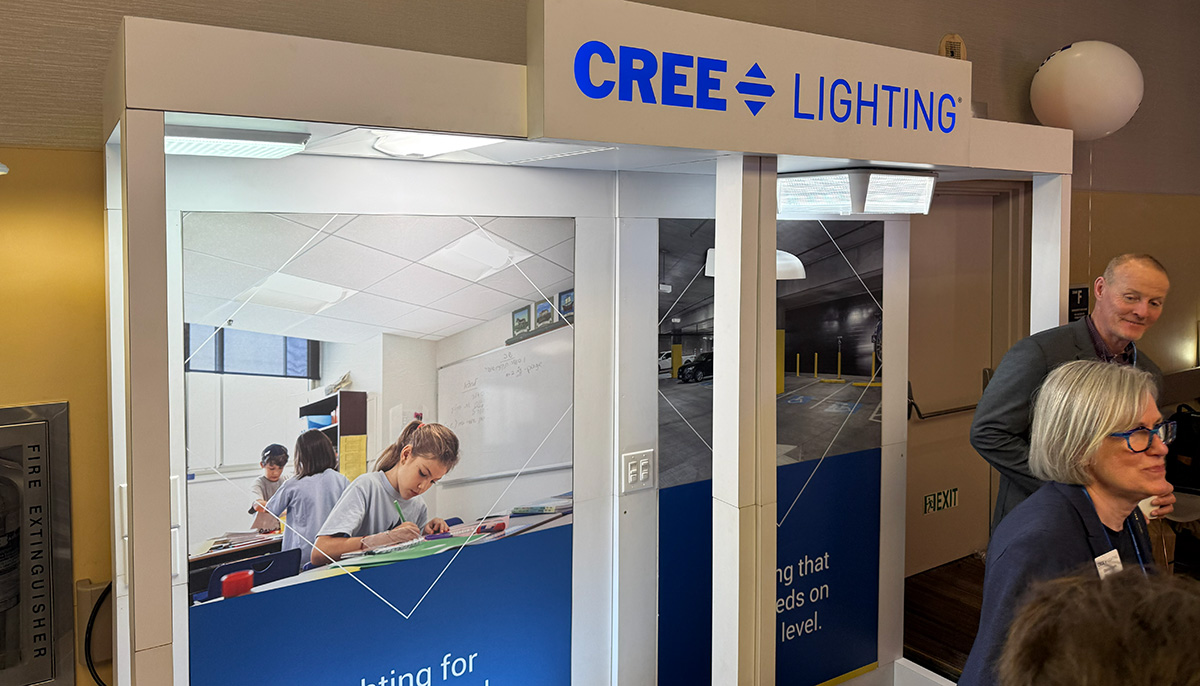
Above: Cree Lighting exhibited at LEDucation 2026, April 14-15 in New York City
What Lighting People Are Watching
Given all the signals of instability, Cree Lighting vendors are evaluating credit exposure. Distributors are watching fulfillment reliability. Specifiers are weighing whether product availability will hold through the life of a project.
The Fanlight case adds more detail to that evaluation: orders moved through the e-commerce channel, shipments went out, and multiple supplier now say payment did not follow.
Six lawsuits in five months do not resolve anything on their own. But they do establish a pattern of pressure building across vendors and employees at the same time.
Each new filing adds another voice to the same question: who is still willing to ship first and get paid later?