November 2, 2026
What We Learned at the Hong Kong Lighting Fair
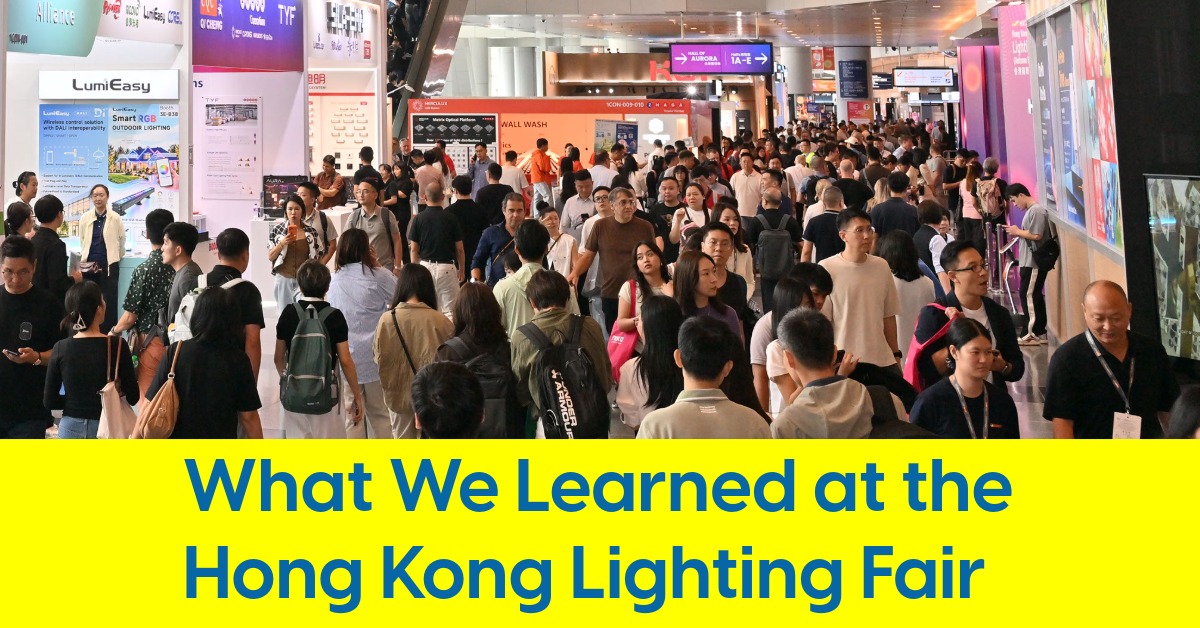
Tariff talk quiets, controls advance and a major manufacturing partnership faces uncertainty
Two years ago, an exhibitor at the Hong Kong International Lighting Fair quoted us $6.99 for a color-tunable 2x2 LED flat panel carrying DLC and UL listings, with a 500-unit minimum. Last year, a Shanghai supplier offered a 2x2 for $3.30, minus any UL, ETL or DLC marks. This year, the hard part was finding a basic 2x2 at all.
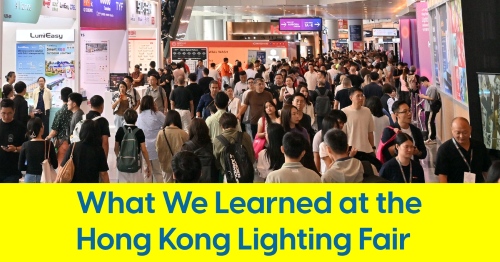
That shift framed our fourth consecutive visit to the fair’s 28th autumn edition, which ran October 27 to 30 at the Hong Kong Convention and Exhibition Centre alongside the Outdoor and Tech Light Expo. The twin fairs drew roughly 3,000 exhibitors, according to organizer HKTDC.
Visitors expecting something like LightFair or LEDucation would be lost here. This is where much of the North American lighting supply chain lives: more than 100 driver manufacturers, numerous lensing options and a deep bench of OEM and ODM factories building products that later wear U.S. and Canadian brand names.

Tariffs Slip Down the Agenda
Tariffs have shaped sourcing since 2018, when the first wave of U.S. duties on Chinese goods took effect, and last year 2025 tariffs dominated booth conversations. This year, they were far less of a pain point. Many manufacturers we spoke with have already established production in Thailand, Vietnam or Cambodia, and they discuss it the way a contractor discusses a backup supply house: unglamorous, but prudent.
Ruby Jadwet, CEO of Truly Green Solutions, has attended for almost 20 years and described the trip as more than product scouting. “As a global manufacturer, we have to look beyond the U.S. market to understand what’s happening around the world,” she said. “Nothing replaces meeting our partners face-to-face and building that trust.”
Controls on Every Wall
Controls were again the strongest technical theme, with most solutions built on open protocols such as DALI and Zhaga. Dozens of booths displayed logos for Casambi, the Finnish wireless controls platform, to advertise compatibility.
Jadwet saw the same emphasis but cautioned that “some of the technology still has a way to go for the U.S. market.” Anyone who sources here knows the distance between what gets demonstrated in Hong Kong and what survives North American listings and specification habits.
Signify Subplot: Inside the Klite Booth
At the Klite booth, we spoke with multiple staffers including Kathy Cen, who handles North American accounts including RAB Lighting and Keystone Technologies. According to booth personnel, Klite makes TLED and point source lamps for RAB and Keystone, products for Cooper Lighting’s Halo line (a Signify brand), and lamps for EcoSmart, The Home Depot’s house brand. Klite stopped making IKEA bulbs in 2024, we were told.
Signify has owned 51% of Klite since 2019, and the arrangement is under strain. According to Signify’s half-year report, the minority shareholders who hold the remaining 49% sued this year, alleging Signify must buy an initial 16.33% of their stake. Signify disputes the claim. Booth personnel acknowledged the dispute but declined to comment.
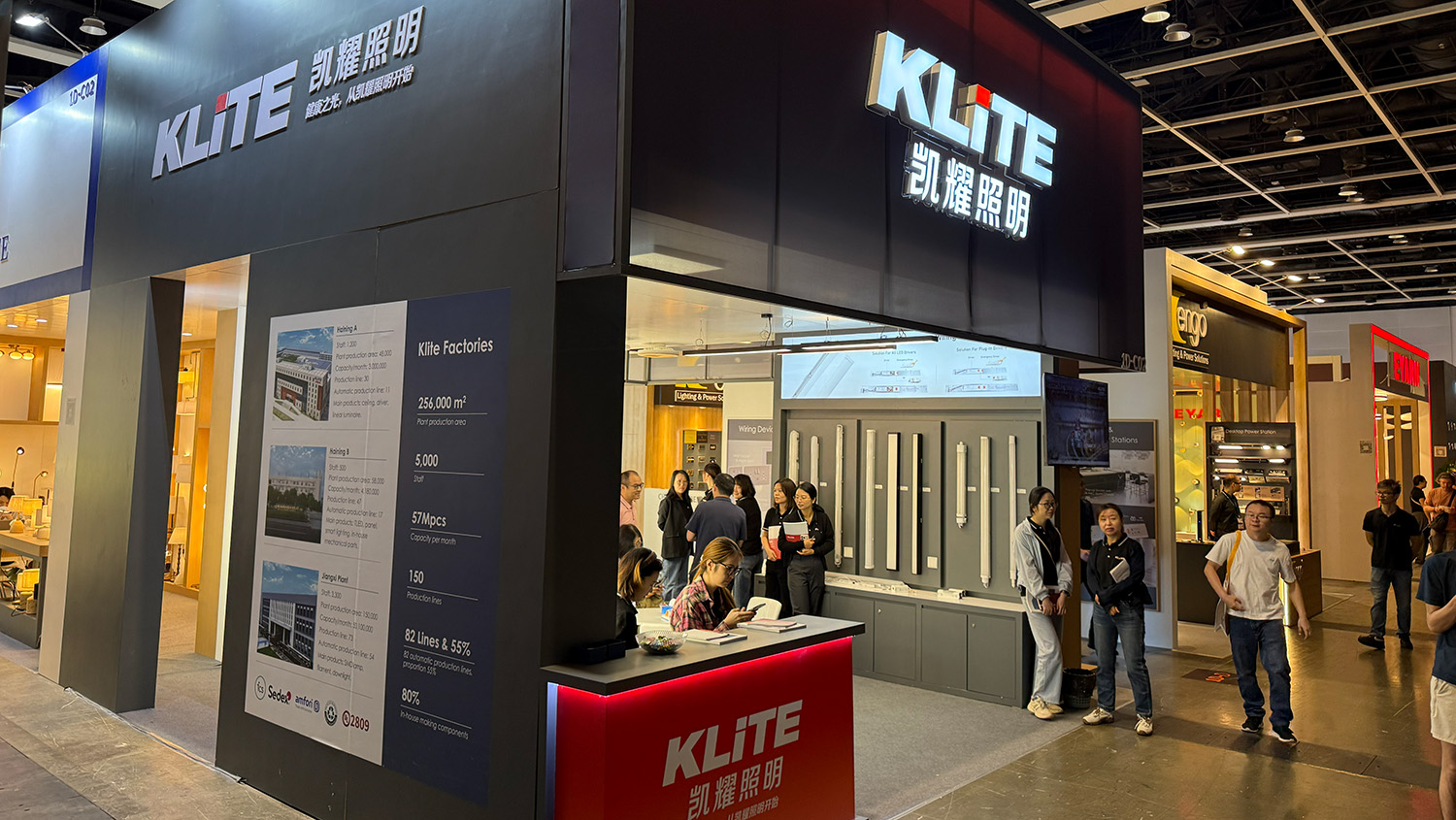
Above: The Klite booth at the Hong Kong International Lighting Fair. Signify, which owns 51% of the lighting manufacturer, is exploring divestiture opportunities amid a dispute with minority shareholders.
Signify may not stay in the picture much longer. On the company’s October 23 earnings call, CEO As Tempelman said Signify is “actively exploring divestiture opportunities with the parties involved,” while cautioning that it was too early to conclude. For brands sourcing from Klite, who owns the factory next year is a practical question.
The IES Plants a Flag
The Illuminating Engineering Society sent its 2026 president, Jared Smith, and exhibited with a booth of its own, using the fair to announce its new Greater China Section which will be led by Charlie Chen.
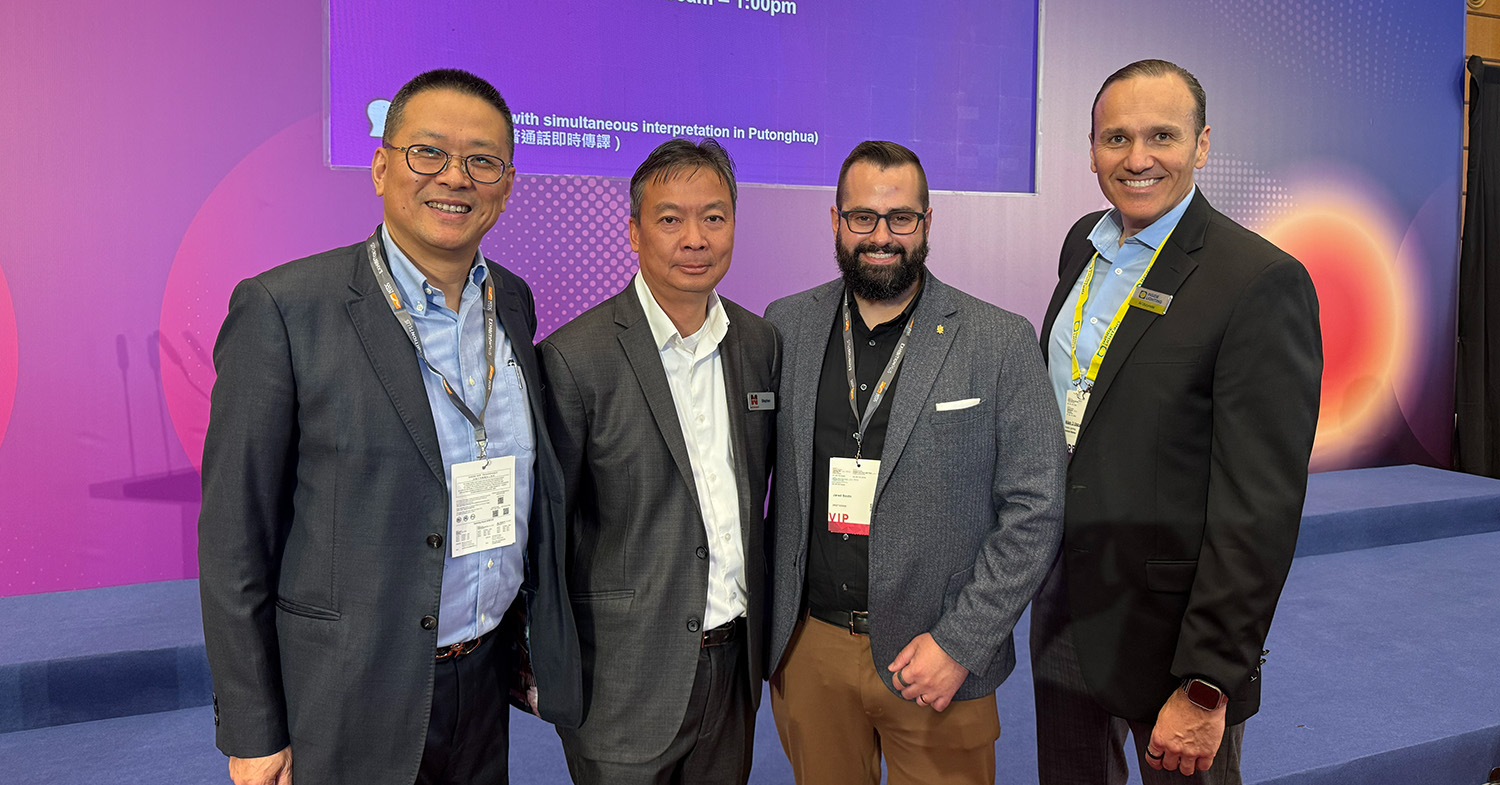
From left: Charlie Chen, Stephen Zhou of mwConnect, Jared Smith, and Al Uszynski of Inside Lighting.
“IES has a lot to offer through our standards, education, and professional network, but that starts with people knowing who we are and how to get involved,” Smith told us. He called the section launch “an opportunity to invite people to help shape our presence in the region.”
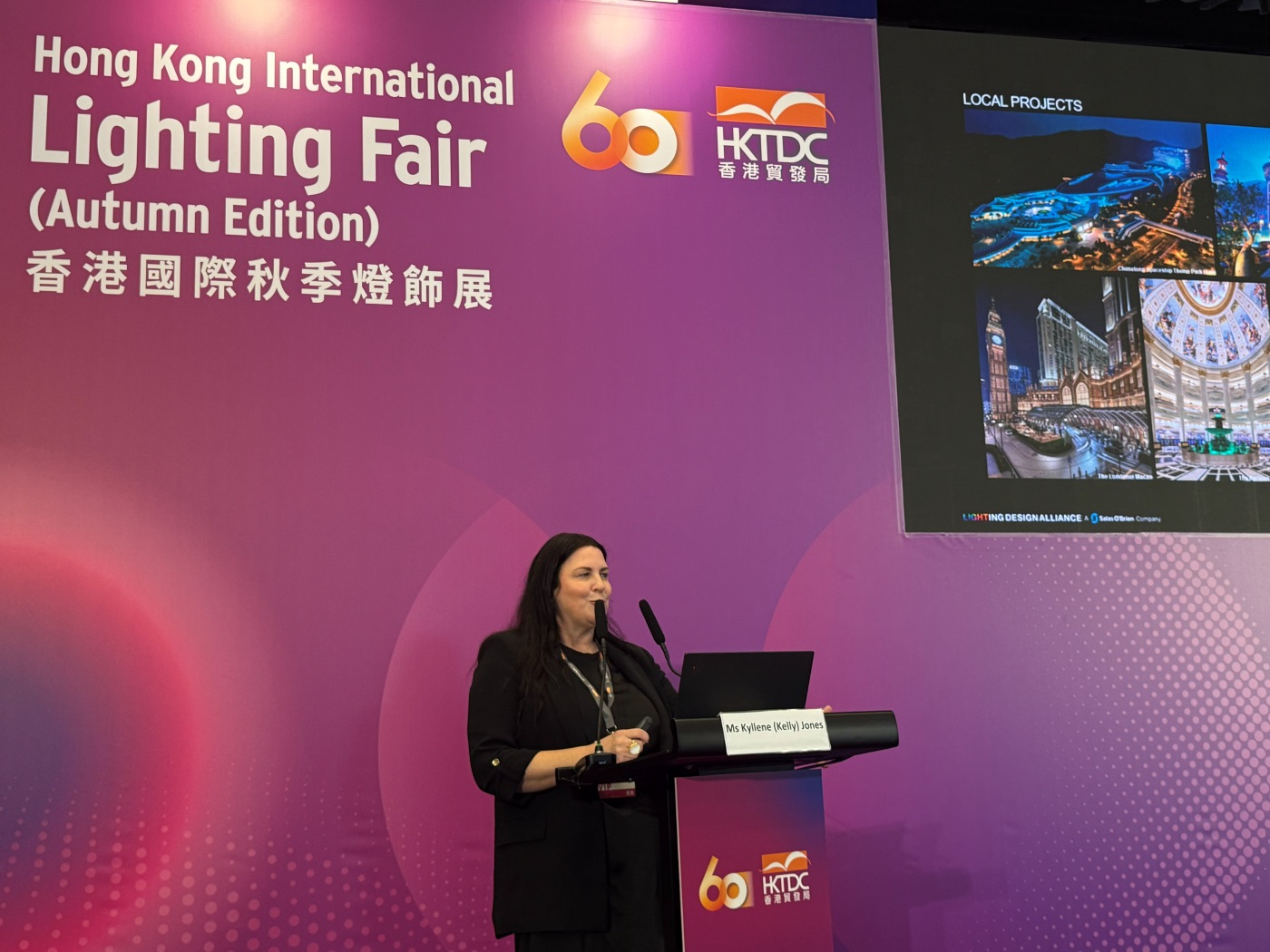
Above: Kelly Jones of Lighting Design Alliance presents the award-winning lighting design for Javier’s in Los Angeles
HKTDC and the IES jointly hosted a session showcasing IES Illumination Awards winners from numerous regions. The lone U.S. project was Javier’s in downtown Los Angeles, presented by Kelly Jones of Lighting Design Alliance in a talk titled “Sculpting with Light.”
The 365-seat restaurant, set inside the Circa high-rise, pairs arched ceilings and Spanish travertine with lighting and controls tuned to give its dining rooms and bar distinct moods. The project earned a 2026 IES Award of Excellence and, earlier this year, an award at Lumen West.
A Science Experiment Grows Up
One of the smaller booths held one of the more interesting products. LumiFree, a brand of Japan Display Inc. (JDI), uses a liquid crystal panel to reshape a fixture’s beam along vertical and horizontal axes independently, producing round, elliptical or line-shaped light with no moving parts. When we highlighted it in 2024, it felt more like a science experiment than a product line.
This year, JDI showed a next-generation model with a more compact structure and a 69.33 mm effective diameter, giving the lineup a third size that the company says will fit a wider range of fixtures.
What the Missing Flat Panel Says
The commodity clutter is still at the fair, but it keeps thinning. Last year we noted fewer booths stacked with generic A19s and UFO high bays, and exhibitors this year again leaned on engineering and design differentiation rather than just flexing rock-bottom pricing.
That makes the missing flat panel the most telling detail of the week. A supply base that once competed almost entirely on price is learning to compete on luminaire differentiation and controls compatibility, engineering support and geographic flexibility. For lighting people who source here, the open question is how quickly what Asian factories can demonstrate becomes what North American distributors and specifiers will accept.