


May 5, 2026
Illinois Advances Strict Outdoor Lighting Standards
State bill introduces dual compliance tracks reshaping public and commercial lighting practices
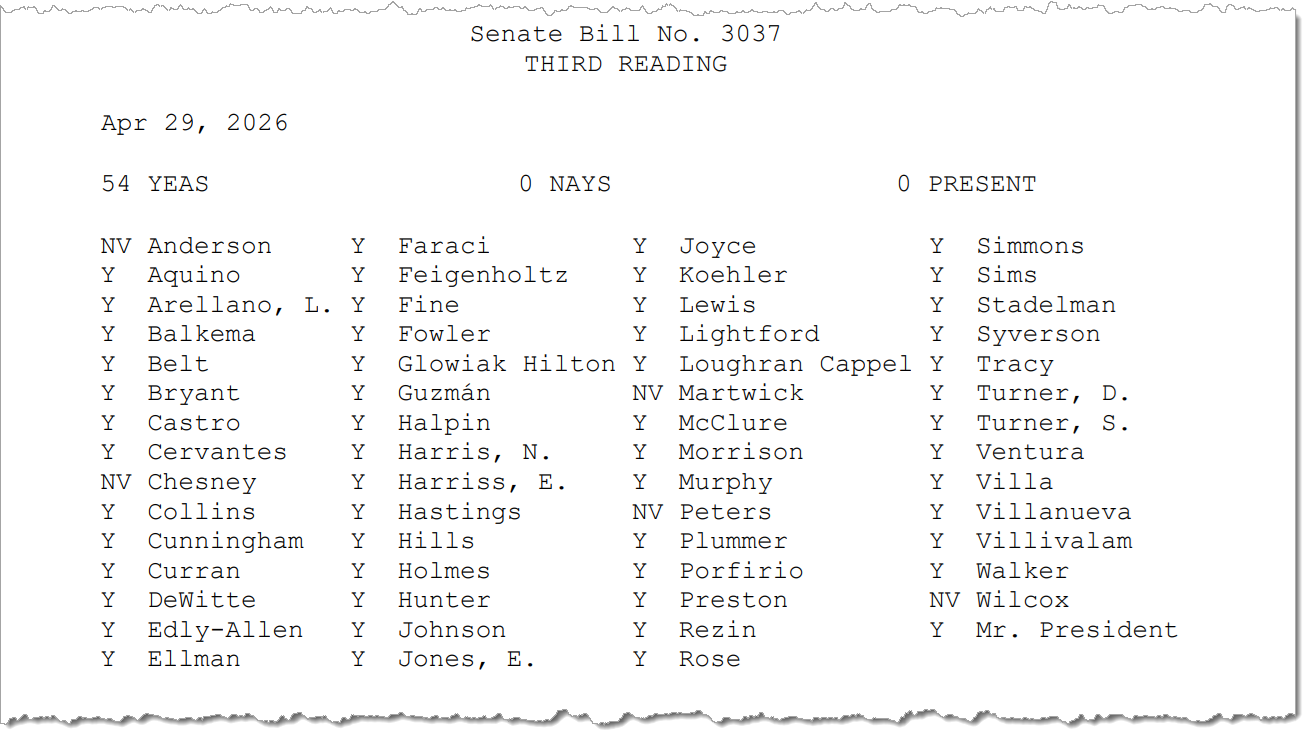
It passed the Illinois Senate 54 to nothing. No dissents. No pushback. For a chamber not typically known for unanimous agreement on much of anything, that kind of vote demands a closer look.
Senate Bill 3037, now heading to the Illinois House, would transform the state's Responsible Outdoor Lighting Control Act into something with a sharper name and sharper edges: the Dark Sky Act. Sponsored by Sen. Laura Ellman and co-sponsored by Sens. Rachel Ventura and Mike Simmons, the bill creates two distinct compliance tracks, one mandatory and one voluntary, that together could reshape how outdoor lighting is specified across Illinois.
Two Tracks, Two Timelines
The more immediate requirement targets state government directly. Beginning December 1, 2026, any new or renovated luminaire purchased or rented with state funds, or installed on land owned, leased, or managed by the State, would need to meet the bill's lighting standards. Roadways, facilities, monuments, public right-of-way spaces: all covered. Existing installations are grandfathered unless renovated. Private and residential applications are not addressed.

The second track runs through the Illinois Stretch Energy Code. Under the amended bill, the Capital Development Board has until December 31, 2029 to adopt a stretch energy code embedding these lighting standards into commercial construction. Critically, stretch codes are voluntary: individual jurisdictions choose whether to adopt them. A municipality that opts in would impose the requirements on new commercial projects. One that does not is unaffected. For lighting contractors, distributors, and specifiers, the practical impact depends entirely on where their work is happening.
What the Standards Actually Require
Within both tracks, the technical requirements are genuinely demanding. Correlated color temperature (CCT) is capped at 3000K, eliminating the 4000K and higher sources common in roadway and commercial work. Luminaires producing more than 1,000 lumens must restrict output above 80 degrees from nadir to five percent or less, pushing specifications firmly into full-cutoff territory.
The light trespass limit is where the bill gets strictest. The cap is 0.1 lux at the property boundary, which converts to approximately 0.009 footcandles, a figure near typical full moonlight. Reaching that threshold requires tight optics, careful aiming, and often meaningful setbacks. Loosely aimed wall packs and shoebox fixtures will not make the cut.
Some Notable Omissions
What the bill does not address is worth equal attention. Despite its photometric ambition, SB3037 contains no time-of-day control requirements. No curfews, no dimming schedules, no occupancy-based shutoff provisions. Lights meeting the trespass and uplight limits could burn at full output from dusk to dawn and remain compliant.
Maine passed comparable outdoor lighting legislation emphasizing trespass and uplight control, though Illinois goes further with its mandatory stretch code mechanism and hard CCT ceiling. The gap between what Illinois is regulating and what it is leaving alone will not be lost on lighting engineers.
For lighting people watching the state-by-state tightening of outdoor codes, Illinois is now the case study to track, with the understanding that its reach, for now, extends further into the public sector than the private one.