


March 6, 2026
DOE Takes Helm of ENERGY STAR Program
After three decades under EPA, the lighting sector has already moved on
For thirty years, the blue ENERGY STAR label quietly helped shape the modern lighting industry. It nudged utilities to offer rebates, persuaded skeptical consumers to try strange spiral CFLs, and — eventually — helped usher LED lamps into nearly every American home.
Now, lighting has largely moved on.
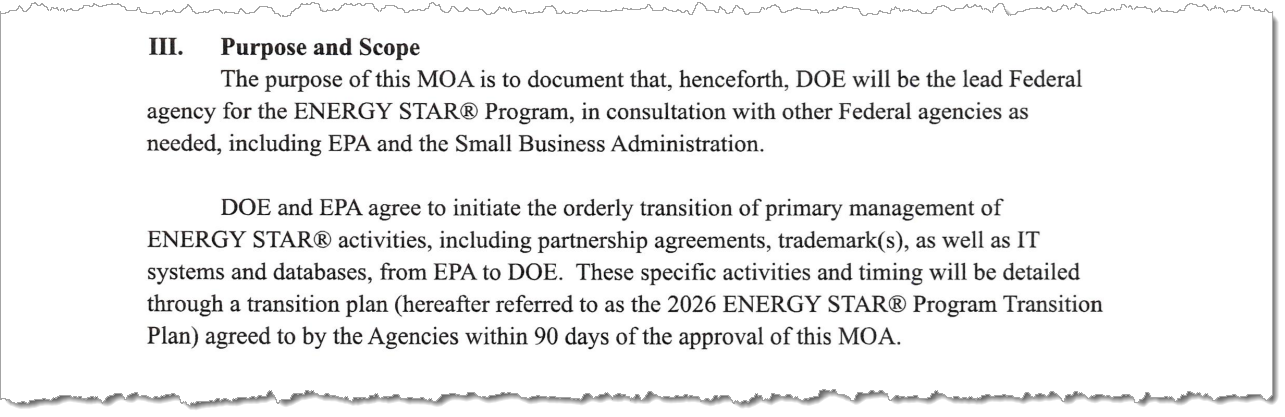
This week, the U.S. Environmental Protection Agency and the U.S. Department of Energy signed a memorandum of agreement shifting primary oversight of the ENERGY STAR program from EPA to DOE, marking a structural change for one of the federal government’s most recognizable efficiency programs.
The agreement, effective March 3, begins a transition in which DOE will become the lead federal agency responsible for managing ENERGY STAR activities, partnerships, trademarks, and program infrastructure.
Not everyone is comfortable with the change. The U.S. Green Building Council, which relies heavily on ENERGY STAR benchmarking across commercial real estate, warned that shifting oversight could create uncertainty for a program deeply embedded in building operations and efficiency programs nationwide. The organization said moving the program raises questions about future funding and whether ENERGY STAR will maintain its current scope.
For certain sectors in the commercial building space, the shift could matter. For lighting, it likely won’t.
That’s because the lighting industry effectively graduated from ENERGY STAR several years ago.

The turning point came in 2022 when the Department of Energy implemented its 45-lumens-per-watt “backstop” efficiency rule for general service lamps. The regulation eliminated most inefficient lamps from the U.S. market and pushed LED technology to near-total dominance in residential lighting.
Today, LEDs account for more than 90% of residential bulb sales. The original mission of ENERGY STAR lighting — first to accelerate CFL adoption, then LEDs — was essentially complete.
EPA acknowledged as much in 2022 when it proposed sunsetting ENERGY STAR specifications for lamps, luminaires, and ceiling fan light kits. The logic was straightforward: once federal standards define the efficiency baseline, a voluntary label has little left to distinguish.
Utility programs reinforced the shift. For years, rebates tied to ENERGY STAR drove enormous volumes of efficient lighting into the market. But as federal standards tightened, utilities gradually stopped subsidizing basic LED lamps and redirected incentives toward controls, connected lighting systems, and demand response.
By 2024, new ENERGY STAR lighting certifications had largely faded from relevance. Manufacturers stopped pursuing the label for most lamps and residential fixtures.
The irony is hard to miss. Lighting was arguably ENERGY STAR’s greatest success story — a textbook example of market transformation.
The program set out to change how Americans light their homes. It succeeded so thoroughly that the label itself became unnecessary.
ENERGY STAR remains a powerful brand for appliances, HVAC systems, buildings, and data centers. But in lighting, the program did its job.
And then, quietly, the industry moved on.